
Sinchang Windmill Coastal Road (신창풍차해안도로)
18.9Km 2025-10-27
1322-1 Sinchang-ri, Jeju-si, Jeju-do
Sinchang Windmill Coastal Road, which continues along the western tip of Jeju Island, presents a view of windmills lined up along the road from an offshore wind farm. The view of white windmills and emerald-colored sea along the winding coastline offer a pleasant fall scenery. There are many other things that unfold before one's eyes as while looking out upon the blue sea, like Chagwido Island afar. The road is well-known for its beautiful sunset so it is a great place to take pictures and watch the setting sun. Along the coastal road is a trail named Eco Experience. It features a Kelp grouper statue, Wondam Experience Site and a rest area where visitors can take selfies with many different backdrops. The observatory located in the middle of the trail is relatively quiet and visitors are recommended to head towards the observatory after taking a few photos on their walk up from Sinchang Windmill Coastal Road.
Donnaeko Resort (Wonangpokpo Falls) (돈내코(원앙폭포))
19.0Km 2025-01-14
137, Donnaeko-ro, Seogwipo-si, Jeju-do
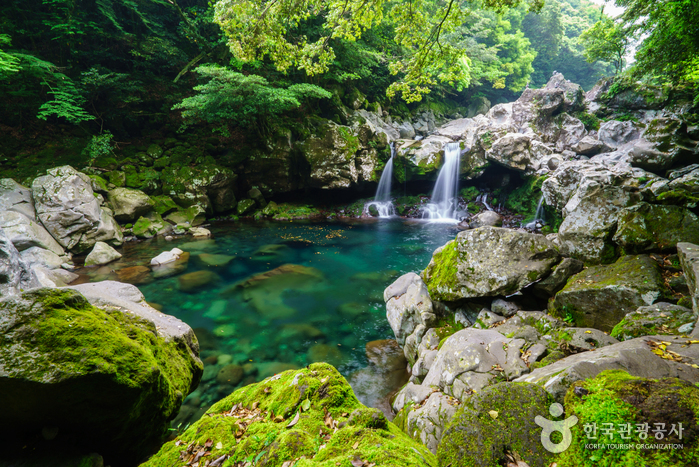
With a valley creek hidden by lush green forest leading to a 5-meter-high waterfall falling into a small pool of water, Donnaeko Resort is like a small paradise hidden in nature. The waters, flowing down from Hallasan Mountain, are clear and icy cold even during the hot summer season. The resort's magnificent views and natural pool make the area a popular vacation destination.
Biyangdo Island (비양도)
19.2Km 2023-01-18
146, Hallimhaean-ro, Jeju-si, Jeju-do
Meaning “to fly over,” Biyangdo Island is the last-formed volcanic island in Jeju (1002). It remains in its original form as a parasitic volcano and it is located in the center of an uncontaminated area of the sea having abundant fishing grounds with varied fish species. The island has many natural formations, including Biyangbong Peak, featuring six mysterious peaks, two craters, and a rock formed like a mom carrying her baby on her back. The island has many walking paths to view these attractions and more.
Gwakji Beach (Gwakji Gwamulhaebyeon Beach) (곽지해수욕장 (곽지과물해변))
19.5Km 2023-02-16
Geumseong 5-gil, Jeju-si, Jeju-do
Gwakji Beach is a beach that has nice conditions including a 350-meter-long, 70-meter-wide white sand beach, an average water depth of 1.5 meters and a slope of about 5 to 8 degrees. Thanks to these conditions, a youth training facility was installed and groups of tourists visit here every year. Gwakji-ri is a historic village where shell mounds from prehistoric times were once excavated. According to a local legend, Gwakji Beach used to be a village in the ancient days, but one day, it became buried in the sand.
Historic Site of Anti-Mongolian Struggle in Hangpadu-ri, Jeju (제주 항파두리 항몽 유적)
19.6Km 2022-08-18
50, Hangpaduri-ro, Jeju-si, Jeju-do
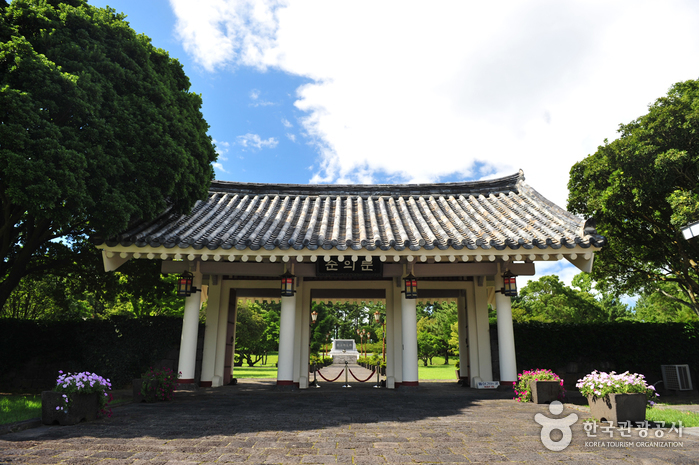
Historic Site of Anti-Mongolian Struggle in Hangpadu-ri is where the Sambyeolcho military unit of the Goryeo dynasty resisted the invasion of Mongolia until the last possible moment. The site houses an
exhibition hall, a monument, and a unique mud fortress. Nearby is Jangsumul Spring (Jangsu means general) which flowed from the footprints of General Kim Tong-jeong. Today, water from the spring
cannot be used as drinking water.
Sambyeolcho was a military unit of the Goryeo dynasty. When the Goryeo dynasty made peace with the Mongolian forces in February 1270 (the 11th year of King Wonjong), the Sambyeolcho special defense unit opposed it and launched a resistance movement. They moved their base to Jindo in Jeollanam-do, but after suffering a huge defeat, they moved to Jeju-do and built Hangpaduseong Fortress. They continued to fight against the Mongolian forces for two more years there. However, all the members were killed in April 1273 (the 14th year of King Wonjong).
This independent anti-Mongolian movement was born out the deeply patriotic belief in the need to safeguard the nation from foreign invasion. In 1977, the government invested 745 million won to restore part of the fortress and build a monument in commemoration of those who died in the war. The work was completed in June 1978.
 English
 한국어
한국어 日本語
日本語 中文(简体)
 Deutsch
 Français
 Español
 Русский


