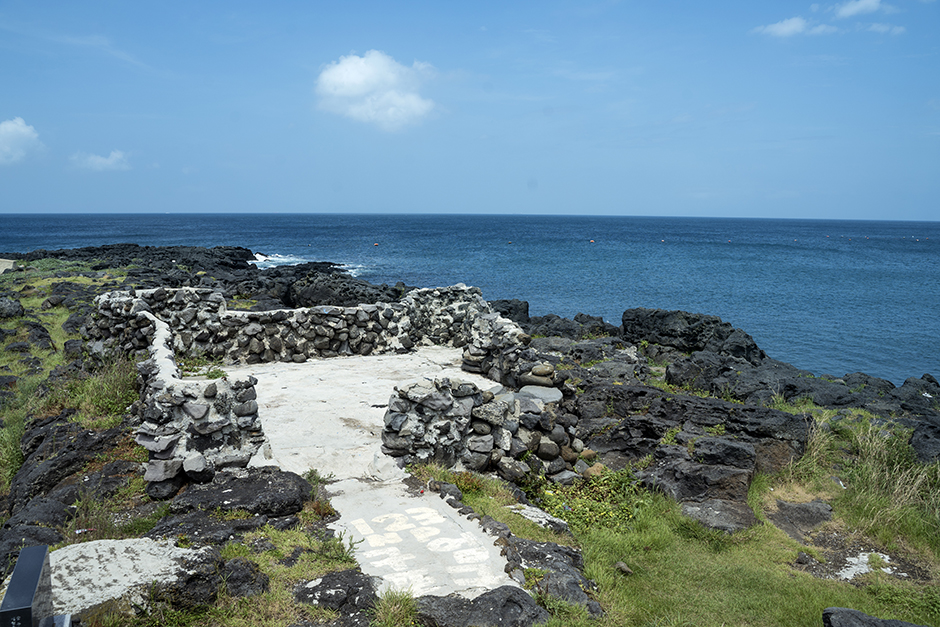
Gueom Port (구엄포구)
16.4Km 2022-06-09
607-5, Gueom-ri, Jeju-si, Jeju
Near Aewol's coastal road, a beautiful sunset spot, there is the small and quaint Gueom Port. Next to the port, there is a rock saltern. This is where salt was produced on top of the basalt. The beautiful coastal road along the rock saltern was designated as a coastal path. There is also a small lighthouse for fishermen returning from sea at night.

Jeju Sanbangsan Carbonate Hot Springs (제주 산방산탄산온천)
16.6Km 2024-03-11
192, Sagyebuk-ro 41beon-gil, Andeok-myeon, Seogwipo-si, Jeju-do
Jeju Sanbangsan Carbonate Hot Springs is a carbonate hot spring that contains the main carbonic acid components (free carbonic acid, bicarbonate, sodium, etc.). It is said that this enhances blood circulation, lowering blood pressure and reducing the burden on the heart. It is also beneficial for skin care and fatigue recovery, making it a perfect place to relax after a long day of exploring Jeju. There is an indoor bath designed with glass inside as well as an outdoor open-air bath, so visitors can bathe while enjoying the view of Sanbangsan Mountain and the deep blue sea.
Podo Hotel (포도호텔)
16.9Km 2024-06-05
863 Sallongnam-ro, Andeok-myeon, Seogwipo-si, Jeju-do
Podo Hotel is designed with the motif of Jeju's oreum (parasitic cone) and thatched-roof houses. The hotel aims to create a healing environment, where guests can unwind while looking out at Jeju's pristine nature. Each guest room features natural hot spring water.
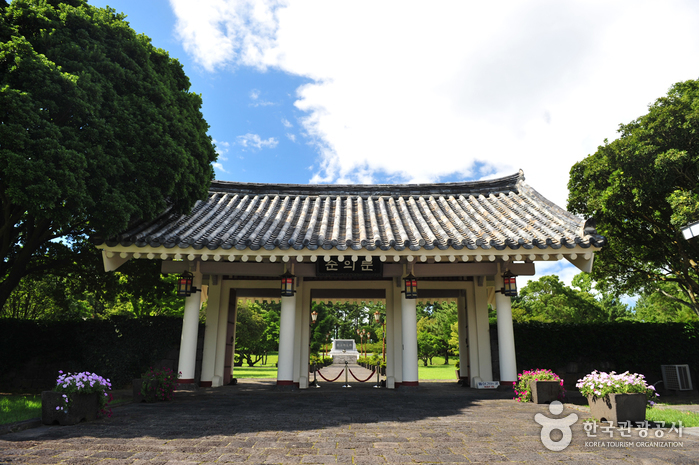
Historic Site of Anti-Mongolian Struggle in Hangpadu-ri, Jeju (제주 항파두리 항몽 유적)
16.9Km 2022-08-18
50, Hangpaduri-ro, Jeju-si, Jeju-do
Historic Site of Anti-Mongolian Struggle in Hangpadu-ri is where the Sambyeolcho military unit of the Goryeo dynasty resisted the invasion of Mongolia until the last possible moment. The site houses an
exhibition hall, a monument, and a unique mud fortress. Nearby is Jangsumul Spring (Jangsu means general) which flowed from the footprints of General Kim Tong-jeong. Today, water from the spring
cannot be used as drinking water.
Sambyeolcho was a military unit of the Goryeo dynasty. When the Goryeo dynasty made peace with the Mongolian forces in February 1270 (the 11th year of King Wonjong), the Sambyeolcho special defense unit opposed it and launched a resistance movement. They moved their base to Jindo in Jeollanam-do, but after suffering a huge defeat, they moved to Jeju-do and built Hangpaduseong Fortress. They continued to fight against the Mongolian forces for two more years there. However, all the members were killed in April 1273 (the 14th year of King Wonjong).
This independent anti-Mongolian movement was born out the deeply patriotic belief in the need to safeguard the nation from foreign invasion. In 1977, the government invested 745 million won to restore part of the fortress and build a monument in commemoration of those who died in the war. The work was completed in June 1978.
Jeju Glass Museum (제주유리박물관)
17.2Km 2022-11-30
1403, Jungsanganseo-ro, Seogwipo-si, Jeju-do
Jeju Glass Museum (originally the Gimpo Glass Museum and SongHee Glass House), has been making a significant contribution to the advancement of Korean glass art over the past several years through constant research and innovation. The museum opened on March 1, 2008, and has state-of-the-art facilities including a glass art exhibition hall, studio with a kiln, glass-blowing room, and glass processing room. With an expansive area totaling 3,500 pyeong and a broad grass field for displaying artwork, it is a perfect place to study and learn. The museum also offers some programs for visitors to learn and gain a greater appreciation for glass art.
Ivar Garden (아이바가든)
17.3Km 2024-04-19
8 Goseongnamseo-gil, Aewol-eup, Jeju-si, Jeju-do
Ivar Garden is an immersive media art exhibition hall in Aewol-eup on Jeju’s northwest coast. The hall is divided into eight exhibition spaces, each with a unique theme like Dreamy, Industrial, Mystery, and Party. The exhibitions extend all the way to the floor and the ceiling for a fully immersive experience.
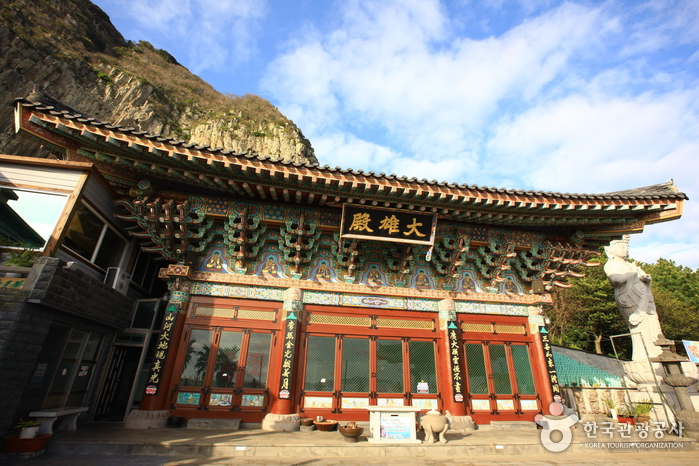
Sanbanggulsa Grotto - Jeju (산방굴사(제주))
18.3Km 2022-11-14
218-12 , Sanbang-ro, Seogwipo-si, Jeju-do
It is said that the peak of Hallasan Mountain where Baekrokho Lake now exists was taken off and thrown away, which then became Sanbangsan Mountain. The myth describes how unlike other mountains on Jejudo Island, this mountain does not have a crater. The 5m-high rock cave at the cliff on the southwest side of the mountain was originally called Sanbanggul Cave, but it is called a temple now because it possesses a Buddhist statue.
This is where monk Hye-Il (964~1053) had lived during the Goryeo dynasty (918~1392)
Inside the cave, you can see Marado Island and the Dragon Head Coast. You can also see small ponds being made by the water drops that fall from the ceiling all through the year. The plant zone on a cliff of Sanbangsan Mountain is also designated as a natural monument. It is the only place on Jejudo Island where island boxwoods grow. On the Dragon Head Coast is the Hamel Memorial Monument.
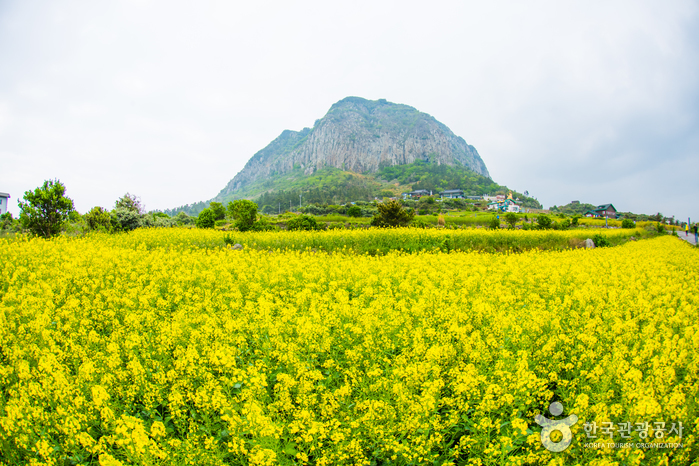
Sanbangsan Mountain (Jeju) (산방산(제주))
18.3Km 2024-03-12
Andeok-myeon, Seogwipo-si, Jeju-do
Sanbangsan Mountain, meaning "mountain with a cave," is home to Sanbanggulsa Temple, a small temple located at the foot of the mountain where a Buddha statue is enshrined. According to Jeju mythology, it is said that the grandmother deity, Seolmundae Halmang, tossed aside a rock from Hallasan's summit, forming this mountain. Standing at 395 meters above sea level on the southwestern coast of Jeju Island, Sanbangsan Mountain boasts vibrant fields of mustard flowers in spring, creating a picturesque view against the backdrop of the mountain.
Hwasun Golden Sand Beach (화순 금모래 해변)
18.7Km 2022-10-14
Hwasunhaean-ro, Seogwipo-si, Jeju-do
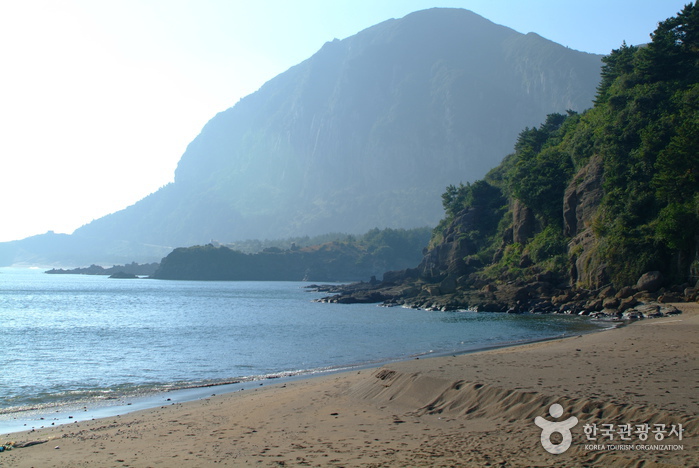
Hwasun Golden Sand Beach is surrounded by beautiful nature. It is close to Sanbangsan Mountain and the Yongmeori Coastline, and the islands of Hyeongjedo, Marado, and Gapado are off the coast to the southwest. On one side of the beach is a fresh water spring where people can enjoy a freshwater bath.
The beach is located in Hwasun-ri in Andeok-myeon, which is easily accessible and has accommodations, shops, and restaurants.
Sanbangsan Canola Field (산방산유채꽃밭)
18.7Km 2024-03-07
San18 Sagye-ri, Andeok-myeon, Seogwipo-si, Jeju-do
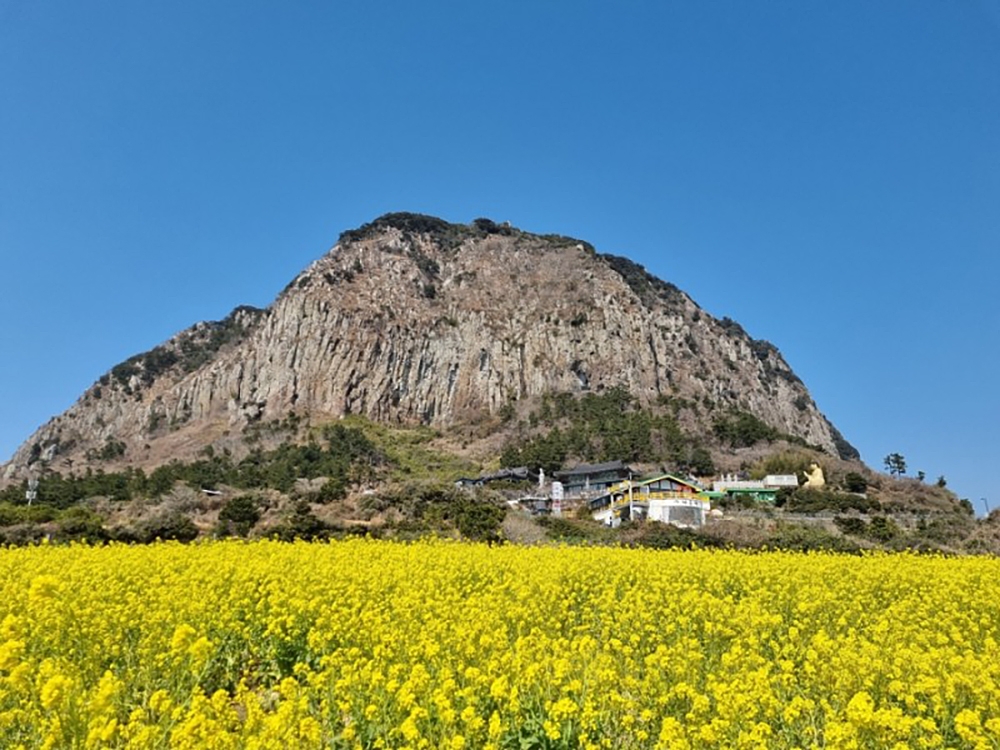
The Sanbangsan Canola Field is located next to the public parking lot in front of Sanbangsan Land, making it very easy to find. The vast fields create a beautiful landscape of yellow blossoms before the backdrop of Sanbangsan Mountain. The flowers are usually at peak bloom in March. In addition to Sanbangsan Mountain, other nearby attractions include Yongmeorihaean Coast, and Sagyehaean Coast.
 English
 한국어
한국어 日本語
日本語 中文(简体)
 Deutsch
 Français
 Español
 Русский


