Korean Deungjan Museum (한국등잔박물관)

  • Korean Deungjan Museum (한국등잔박물관)
  • Korean Deungjan Museum (한국등잔박물관)
  • Korean Deungjan Museum (한국등잔박물관)
  • Korean Deungjan Museum (한국등잔박물관)
  • Korean Deungjan Museum (한국등잔박물관)
  • Korean Deungjan Museum (한국등잔박물관)
  • Korean Deungjan Museum (한국등잔박물관)
  • Korean Deungjan Museum (한국등잔박물관)
  • Korean Deungjan Museum (한국등잔박물관)

Explanation

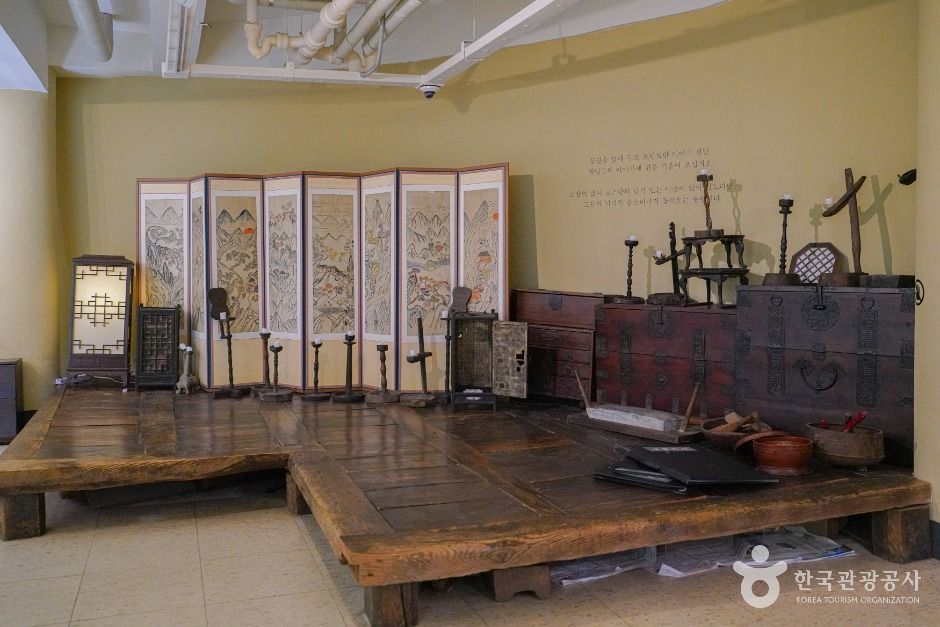
Located opposite the tomb of Jeong Mong-ju, the Korean Deungjan Museum is a private museum showcasing traditional lamps collected over more than 50 years by director Kim Dong-hwi. As Korea’s only museum dedicated to traditional Korean lighting devices, it offers insight into the everyday lives of past generations and is widely visited by both individuals and student groups. The cylindrical, lighthouse-shaped building—designed with inspiration from the walls of Suwon Hwaseong Fortress—features one basement level and three above-ground floors, with exhibition spaces on the first and second floors and a multipurpose hall for seminars and performances on the third. An annex displays agricultural tools, while the outdoor area includes a pond and a stone garden ideal for a leisurely stroll. The first-floor permanent exhibition, themed around traditional Korean oil lamps, presents lighting used in various domestic spaces such as kitchens, storerooms, sarangbang, and anbang, alongside everyday household items. The second floor explores the historical development of lighting under the themes of daily life and ritual use, allowing visitors to compare styles across periods. A special exhibition gallery on the first floor features works by local artists from Gyeonggi-do, and the museum offers a range of educational programs for all ages, including hands-on activities like making candles, LED lamps, and ceramic oil lamps. Its location near the tomb of Jeong Mong-ju makes it easy to combine both sites in a single visit.


Homepage

www.deungjan.org


Information Use

Contact and Information : +82-31-334-0797

Day off : Mondays (open if Monday is a holiday), January 1, and on the day of Seollal (Lunar New Year's Day) & Chuseok (Korean Thanksgiving Day)

Charges : Adults 10,000 won Children & Teenagers 7,000 won Senior citizens (ages 65 & over) 5,000 won * Free admission: Preschoolers (must be accompanied by an adult)

Hours : October-March 10:00-17:00April-September 10:00* Last admission is 30 minutes before closing


Location

8 Neunggok-ro 56beon-gil, Mohyeon-eup, Cheoin-gu, Yongin-si, Gyeonggi-do
10y Ground (10년후그라운드)

10y Ground (10년후그라운드)

2026-06-05

1 Yangchon-gil, Nam-gu, Gwangju

10y Ground, also known as 10 Years Later Ground, was originally built in 1969 as a church and gymnasium. It was later transformed into Eunseong Kindergarten in 1975. For over 50 years, it has served as a learning space that nurtured countless dreamers, preserving layers of memories and history across generations. Now reimagined as a village concierge in Yangnim-dong, the space offers a range of unique, locally rooted experiences found only in the area. It brings together diverse knowledge-based services, including education, community, and publishing, as well as food experiences that introduce new lifestyles. A variety of cultural and artistic programs are also available to enrich everyday life. 10y Ground hosts events and gatherings, operates docent tours and hands-on art programs, and features a curated selection of local goods. Signature beverages, including the 1890 Vienna latte and a classic Americano, are also available.

Eihwaz (아이와즈)

Eihwaz (아이와즈)

2026-06-02

71 Sangwan-gil, Gwangsan-gu, Gwangju

Eihwaz, located in Gwangju Metropolitan City, is a multi-cultural space inspired by a European sensibility and centered on the theme of “the most beautiful moments in life.” The venue offers a range of curated spaces and programs, providing diverse experiences for visitors alongside facilities suitable for various purposes. Designed for flexible and organic use, the space accommodates a wide range of purposes, including brand showcases, corporate training sessions, and trendy pop-up stores. With its unique concept and versatile facilities, Eihwaz stands out as a distinctive venue in Gwangju, offering an exotic and immersive leisure experience within the city.

OAR Contemporary Art Museum (오아르미술관)

OAR Contemporary Art Museum (오아르미술관)

2026-05-14

260-6 Geumseong-ro, Gyeongju-si, Gyeongsangbuk-do

OAR Contemporary Art Museum, meaning “Beauty Encountered Today,” is a private art museum in Gyeongju that brings together traditional Korean art and contemporary works from around the world that have been collected since 2005. Located near Daereungwon Ancient Tomb Complex, it offers a unique cultural setting where the city’s rich heritage meets modern artistic expression. Through a diverse range of exhibitions, programs, and events, the museum provides an accessible and engaging space for visitors to experience art. As a growing cultural landmark, OAR Contemporary Art Museum invites everyone to explore creativity in a setting that reflects the timeless charm of Gyeongju.

Jungnim Changgo (중림창고)

Jungnim Changgo (중림창고)

2026-04-24

33 Seosomun-ro 6-gil, Jung-gu, Seoul

Jungnim Changgo is a space created by remodeling an old warehouse, serving as a cultural heritage that reflects the traces of modern industry in Seoul. It is also a multipurpose cultural space that combines exhibitions, bookstores, cafes, and programs. It also has a shared library where book curators with diverse tastes gather to introduce, exhibit, and sell books. Located near Seoul Station, it serves as a bridge connecting tourism, local communities, and culture.

Little Prince House (감천문화마을 어린왕자 전시관)

Little Prince House (감천문화마을 어린왕자 전시관)

2026-03-12

200 Gamnae 1-ro, Saha-gu, Busan

Little Prince House in Gamcheon Culture Village, Busan, was established by the Succession Antoine de Saint-Exupéry in collaboration with Gamcheon Culture Village. As the only exhibition hall in Korea dedicated to "The Little Prince," it invites visitors to explore Saint-Exupéry’s philosophy through immersive displays, photo zones, and experiential exhibits inspired by the story’s iconic themes.

Chungju Museum (충주박물관)

Chungju Museum (충주박물관)

2026-03-11

112-28 Jungangtap-gil, Jungangtap-myeon, Chungju-si, Chungcheongbuk-do

Chungju Museum was established with the purpose of preserving academic research and artifacts of the Korea's central inland cultural region and realizing a museum that engages with citizens through various events such as special exhibitions. It is composed of the first exhibition hall, the second exhibition hall, and outdoor exhibition spaces. The first exhibition hall displays Buddhist relics, such as those related to Mireukdaewon Stone Temple Site and the second exhibition hall focuses on materials excavated from the Chungju area, showcasing the historical characteristics from the prehistoric era to the Unified Silla period. In particular, the exhibition of the Chungju Goguryeobi Monument and the Danyang Jeokseongbi Monument demonstrates that the Chungju area was a strategic location during the Three Kingdoms period.

Exhibition Hall of Chungju Goguryeo Monument (충주고구려비전시관)

Exhibition Hall of Chungju Goguryeo Monument (충주고구려비전시관)

2026-03-11

2319 Gamno-ro, Jungangtap-myeon, Chungju-si, Chungcheongbuk-do

Opened in 2012, the Exhibition Hall of Chungju Goguryeo Monument is the only place in Korea where visitors can see the Goguryeobi Monument, a stone stele from the ancient Goguryeo Kingdom. Chungju was once a strategic stronghold, controlling key mountain passes and the Namhangang River. The monument provides evidence of Goguryeo’s occupation of the area for more than 70 years. Although it had long stood in Ipseok Village, its historical significance was not recognized until 1979. It is believed to have been erected after King Jangsu expanded Goguryeo’s territory into the Namhangang River basin. Beyond the monument itself, the exhibition hall presents Goguryeo’s history, culture, legends, and daily life, as well as information on the monument’s discovery and other major Goguryeo relics.

Jangmi Gallery (장미갤러리)

Jangmi Gallery (장미갤러리)

2026-02-20

232 Haemang-ro, Gunsan-si, Jeonbuk-do

Jangmi Gallery was originally built during the Japanese colonial period and was renovated in 2013 into a cultural art space. Its name comes from “jangmi” (藏米), meaning “stored rice,” referring to Jangmi-dong—an area once used as a granary for rice collected and shipped to Japan through Gunsan Port during the colonial era. Large warehouses were built near the port to gather grain from the Honam and Chungcheong regions before export. Although the name Jangmi-dong is no longer used as an official administrative district, the history remains embedded in the area. Today, the gallery’s first floor operates as a hands-on learning center offering craft programs such as making coasters, scented candles, wooden necklaces, and personalized handkerchiefs, popular with children, families, and international visitors. The second floor serves as an exhibition hall, hosting memorial and special exhibitions by Korean artists. Adjacent to the gallery is the 77-seat performance hall, created by renovating a former rice warehouse used in the 1930s, and now used for cultural performances and events.

Cheongju Arts Center (청주예술의전당)

Cheongju Arts Center (청주예술의전당)

2026-01-29

69 Heungdeok-ro, Seowon-gu, Cheongju-si, Chungcheongbuk-do

The Cheongju Arts Center hosts a wide range of cultural events for both residents and visitors, covering diverse genres and themes such as opera, ballet, musicals, symposia, and more. The center features a large and a small performance hall, large and small exhibition rooms, and a large conference room, along with convenient facilities such as a children’s playroom.

Ulsan Keunaegi House (울산큰애기집)

2026-01-29

28 Munhwaui-geori, Jung-gu, Ulsan

Ulsan Keunaegi House is a cultural complex that exhibits and sells tourism-related products. The first floor houses a tourist information center and a souvenir shop, while the second floor serves as an exhibition space decorated with themed props. The third floor is a photo studio, where visitors can rent retro costumes and enjoy unique photo sessions in a variety of styles with couples, friends, or family.