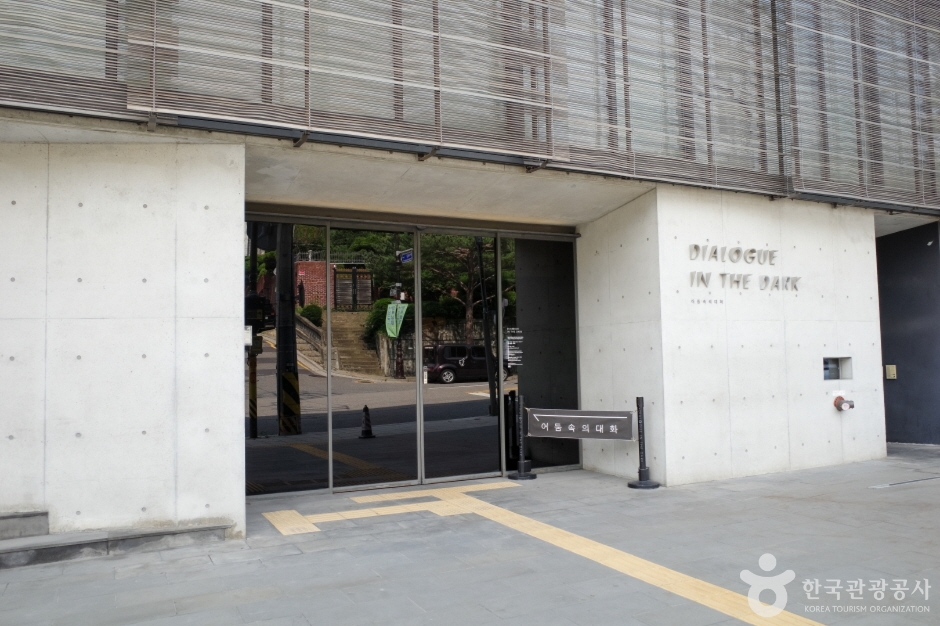
Dialogue in the Dark – Bukchon (어둠속의대화 북촌점)
2.2Km 2025-07-04
Gahoe-dong, Jongno-gu, Séoul (Corée du Sud)
Située près du palais Gyeongbokgung, Dialogue in the Dark – Bukchon est une exposition participative sensorielle unique qui se déroule dans l’obscurité totale pendant 100 minutes. Accompagnés par un·e Roadmaster, les participants explorent différents environnements uniquement à travers les sens du toucher, de l’ouïe, de l’odorat et du goût.
Créée en Allemagne en 1988, cette exposition internationale a été présentée dans plus de 161 villes à travers le monde, touchant plus de 12 millions de visiteurs en Europe, en Asie et en Amérique.
Les visiteurs doivent arriver 15 minutes avant l’heure de réservation pour retirer leurs billets, déposer leurs affaires personnelles et se préparer à l’expérience. L’entrée se fait à l’heure exacte via un ascenseur menant progressivement vers une obscurité complète. Pendant 100 minutes, aucune sortie n’est possible ; il est donc essentiel d’utiliser les toilettes à l’avance.
L’exposition est située à 700 m de la sortie 2 de la station de métro Anguk (ligne 3). Le quartier de Bukchon et ses environs, proches du palais Gyeongbokgung, offrent également de nombreux cafés et restaurants à découvrir avant ou après l’expérience.
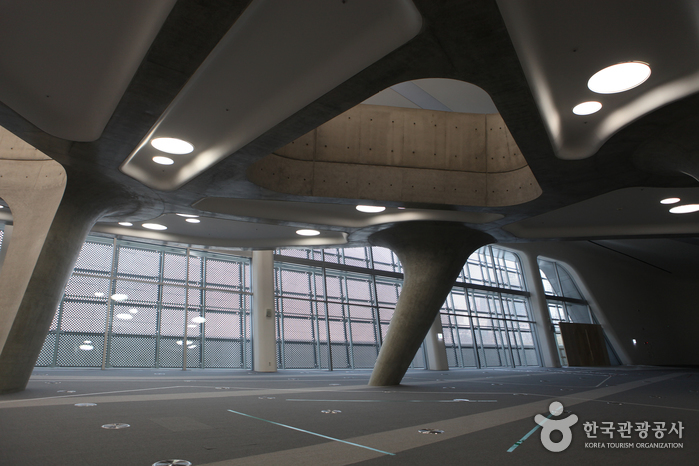
Place DDP (동대문디자인플라자(DDP))
2.2Km 2024-12-17
281, Eulji-ro, Jung-gu, Seoul
Le terme DDP (Dongdaemun Plaza) renvoit à trois thématiques : Le rêve (꿈꾸고, Dream), le design (만들고, Design) et le jeu (누린다, Play). L'espace propose tout au long des années des expositions, des fashion show, des forums, des conférences, etc.
Of one book and stay / 일독일박
2.2Km 2025-08-11
11-1, Pirundae-ro 3-gil, Jongno-gu, Seoul
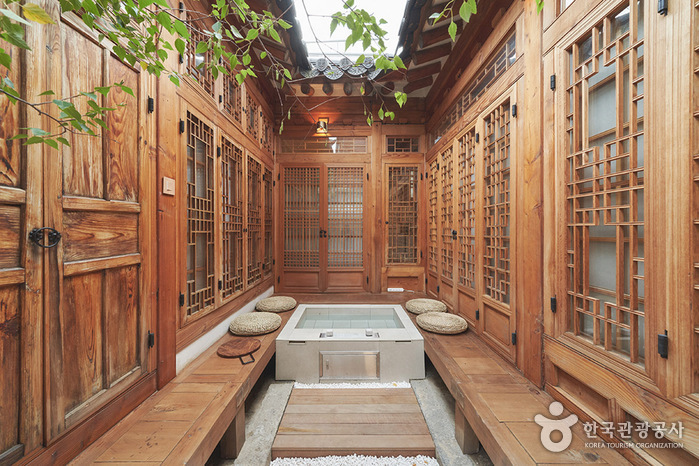
This hanok (traditional Korean house) is located in Seochon Village near Gyeongbokgung Palace. It is a modern C-shaped hanok centered around the inner courtyard, which is the first thing that the guests see after entering through the gate. While it is not expansive, white pebbles and a foot bath make this hanok a unique one. One can enjoy a foot bath while sitting on the porch.
The bedroom, which is located beyond the living room, is furnished with a queen-sized bed. Opening the screen doors brings one to the view of the kitchen area beyond the inner courtyard. A large table, plush sofa, and a small bookcase make the space ideal for books and discussions. Climbing the wooden ladder to the side of the kitchen brings one to the attic, which also doubles as a Korean-style room with a skylight. The kitchen is furnished with a refrigerator, microwave oven, gas stove, electric kettle, toaster, pots, utensils, wine glasses, and bottled water. There is a restroom with a bathtub. The standard occupancy of the house is 4 people.
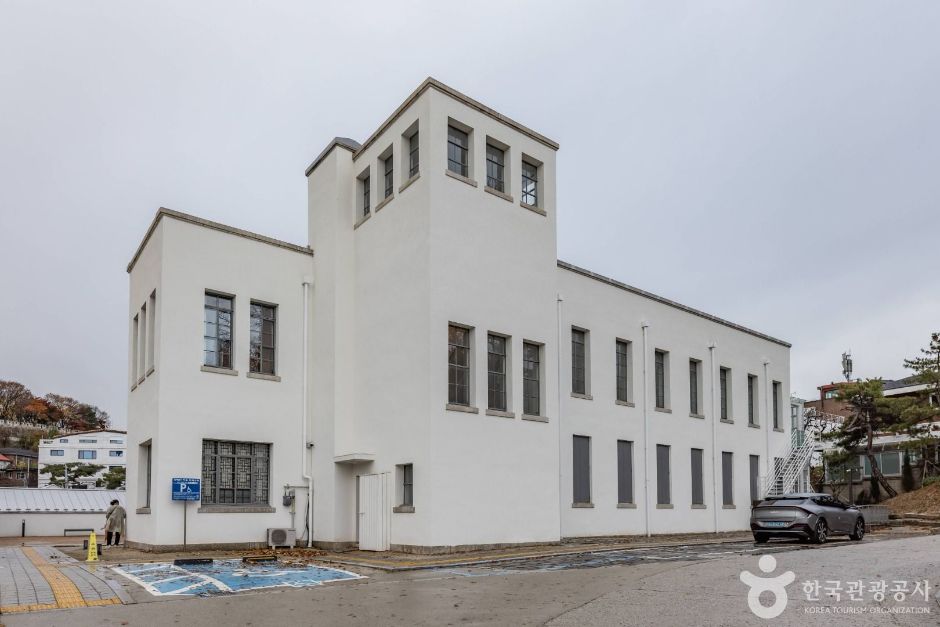
Musée d'art Gansong (간송미술관(서울 보화각))
2.3Km 2025-10-23
102-11, Seongbuk-ro, Seongbuk-gu, Seoul-si
Le Musée d'art de Gansong est le premier musée d'art privé de Corée, fondé en 1938 par le professeur de Gansong Jeon Jeon-pil sous le nom de Bohwa-gak (葆華閣) et réorganisé en tant que Musée d'art de Gansong en 1966. Il a été désigné comme bien culturel national enregistré le 30 décembre 2019. Son fondateur, Kansong Jeon Seon-pil, a recherché et préservé des artefacts représentant la Corée afin de promouvoir l'excellence et la beauté de la culture coréenne, qui avait été délibérément dévaluée et effacée par la domination coloniale japonaise. Le musée d'art de Kansong conserve 11 trésors nationaux et 22 trésors.
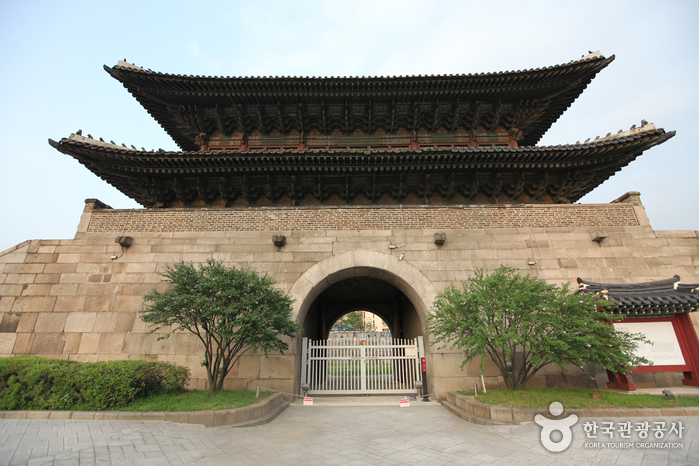
Porte Heunginjimun (흥인지문)
2.3Km 2023-04-26
288, Jong-ro, Jongno-gu, Seoul
La porte Heunginjimun a été construite pour protéger Hanseongbu, lieu de gouvernance historique du pays. La porte Heunginjimun était la porte à l'est de la muraille de Séoul parmi les 8 portes de l'édifice. Elle est aussi appelée la porte Dongdaemun. La porte fut construite durant la 5ème année de règne du roi Taejo en 1396 puis réaménagé durant le règne du roi Danjong en 1453. Elle fut reconstruite en 1869 durant la sixième année de règne du roi Gojong. Elle est un symbole de l'architecture de la fin de la période de la dynastie Joseon.
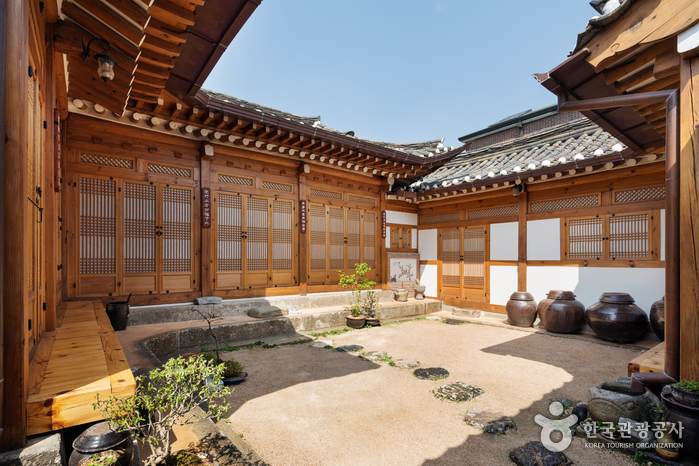
Hanok Guesthouse Dongchonchae / 한옥 게스트하우스 동촌재
2.3Km 2025-08-12
21-10, Jahamun-ro 11-gil, Jongno-gu, Seoul
Built in 1939, Dongchonchae was designated as Seoul Well Hanok by the Seoul Metropolitan City in 2016. In 2020, this hanok (traditional Korean house) received the Certificate of KOREA QUALITY from the Korea Tourism Organization in the Heritage Hanok field in recognition of its historicity and quality of services. Dongchonjae is located in the western side of Gyeongbokgung Palace, at Seochon. When one passes through its main gate, one sees the yard, with anchae (women's quarters), sarangchae (men's quarters), and byeolchae (detached quarters) surrounding the plot. Anchae has four rooms, daecheong (wood-floored main hall), a kitchen, and a restroom. One of the rooms is used for tea ceremonies as well. Outside of the sarangchae and byeolchae, which are the living spaces for the owners, visitors have free access to the numaru (raised open floor) and the yard. The anchae’s rooms “Bom” and “Yeoreum” can accommodate 2 to 3 adults each, while the rooms “Gaeul” (Tea Room) and “Gyeoul” are optimal for two. The building is rented out as a whole, so no more than one group may stay in the building at any given time. Standard occupancy is four persons, and eight is the maximum number. There are two restrooms, one within the anchae building, one out in the backyard.
Cooking is not allowed in the kitchen, but guests are free to bring in outside food. Experience programs on offer include nighttime exploration of Seoul City Wall, tea ceremony, folk songs, and rice cake making. Additional payment is only required for rice cake making. Guests may choose between two types of complimentary breakfast: Korean, which comes with rice, soup, and three side dishes; and Western, which comes with bread, salad, and coffee. There are a 100-in screen and mini projector for film watching in the yard or daecheong. Towels, toiletries, hair dryer, bottled water, traditional tea, and capsule coffee are included. The kitchen is equipped with kitchen utensils, a microwave, and a coffee pot, enough for instant foods. Guests also have access to refrigerator and washing machine
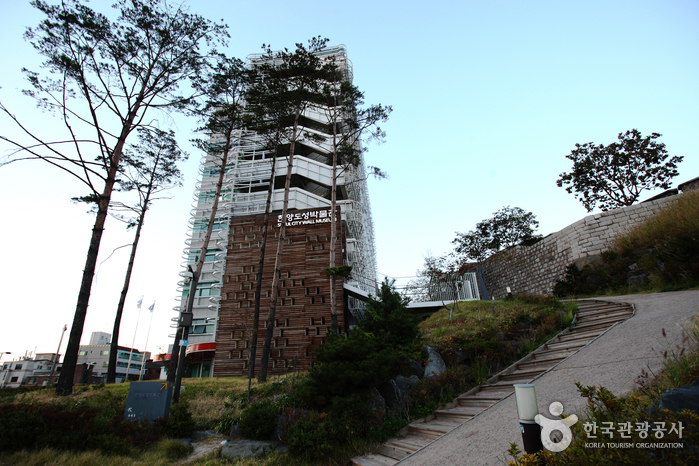
Musée des murailles de Séoul (한양도성박물관)
2.3Km 2021-09-15
283, Yulgok-ro, Jongno-gu, Seoul
La muraille de Séoul (Hanyangdoseong) a été construite pour désigner les limites de la capitale et protéger la ville des attaques extérieures. Hanyangdoseong qui faisait plus de 18, 627km est la muraille qui est restée le plus longtemps 'muraille de défense' parmi celles des capitales qui existent de nos jours. Le musée des murailles de Séoul, situé au début de la rue Sunseong, présente l'histoire de la muraille et les valeurs du patrimoine culturel.
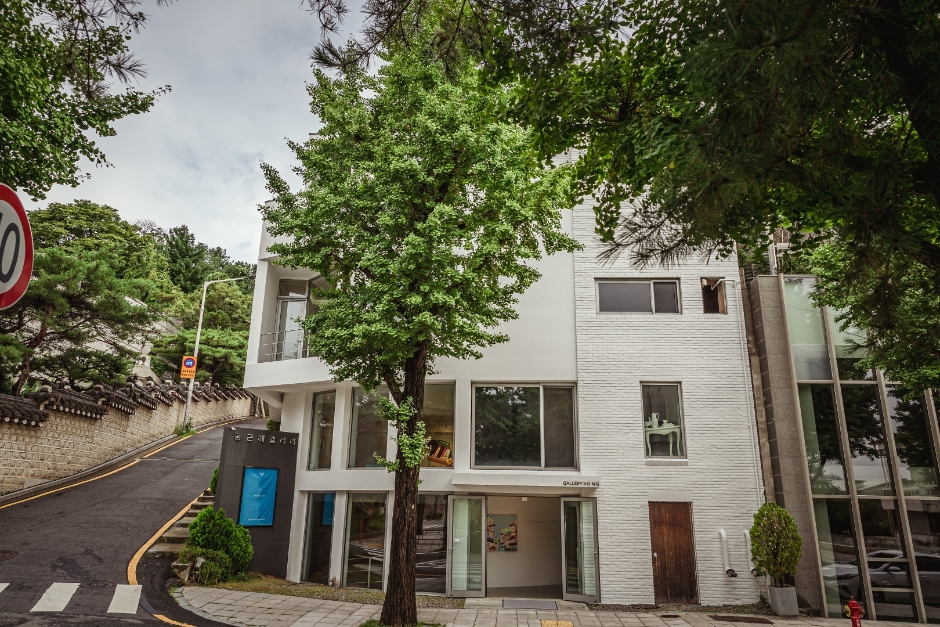
Galerie K.O.N.G (공근혜갤러리)
2.3Km 2024-10-25
38, Samcheong-ro 7gil, Jongno-gu, Seoul
Ouvert depuis 2005, la galerie joue un grand rôle sur le développement de l'art de la photographie en Corée. La galerie se situe désormais près de Cheongwadae, dans l'arrondissement Samcheong-dong. La galerie s'occupe désormais de mettre en avant notamment des artistes contemporains à travers le monde entier.
Village Seochon (서촌마을)
2.4Km 2021-07-14
45, Pirundae-ro, Jongno-gu, Seoul
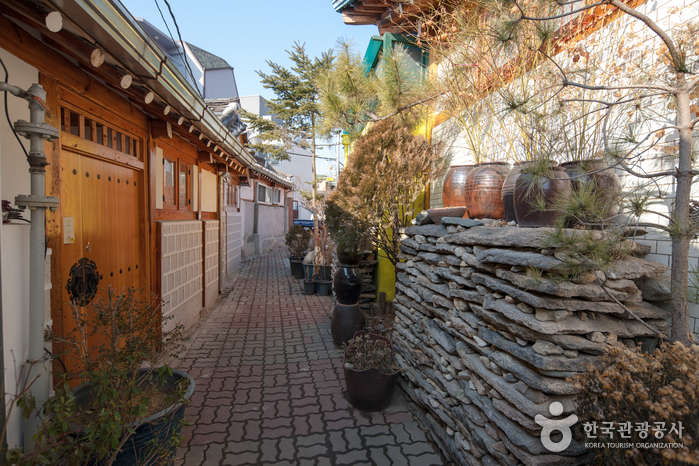
Le village Seochon se situe à l'est du palais Gyeongbokgung. Il s'agit d'un lieu composé à la fois de maisons traditionnels hanok, de petites ruelles paisibles, mais aussi de nouveaux magasins qui forment une très belle harmonie dans le village. En parcourant les nombreuses petites ruelles des lieux, vous pourrez aussi apprécier plusieurs peintures murales très colorèes. Ce village se distingue donc par son côté à la fois pittoresque mais aussi raffiné.
Haeunjae / 하은재
2.4Km 2025-08-12
68-10, Jahamun-ro, Jongno-gu, Seoul
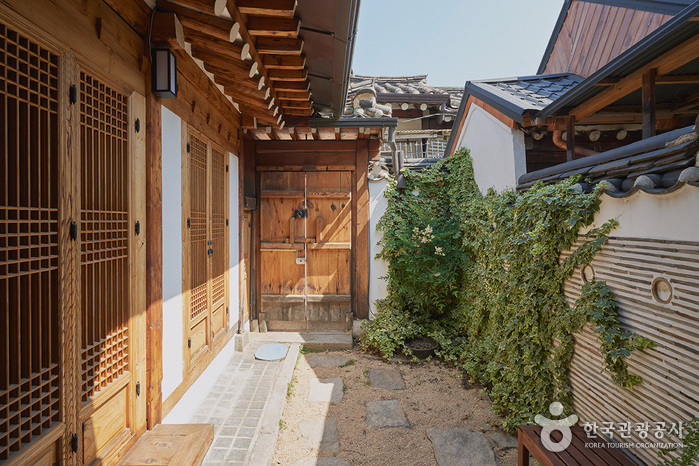
Haeunjae (下隱齋), meaning “hermit’s residence,” is a hanok (traditional Korean house) residence located in Seochon Hanok Village, near Gyeongbokgung Station on Seoul Subway Line 3. It is dedicated to the ideal of “movies and rest,” and takes after the characteristic form of modern hanok with a small courtyard. The entire house is rented out at once, with a queen bedroom, kitchen, movie room, and two restrooms. Up to 4 guests can reserve the house, with each additional guest above the standard of 2 having access to additional bedding.
The movie room is furnished with a Bose sound system, beam projector, and screen, along with a mobile foot bath. The kitchen is equipped with a refrigerator, hand drip coffee maker, toaster, electric kettle, and utensils. A 10% discount is available for guests staying for more than 2 nights on weekdays, and towel replacement and cleaning services are offered for guests staying for more than 3 nights.
The residence is located close to tourist sites like Tongin Market, Gyeongbokgung and Changdeokgung Palaces, and Samcheong-dong area.
 Français
 한국어
한국어 English
 日本語
日本語 中文(简体)
 Deutsch
 Español
 Русский


