![Blueboat guest house Jeonju [Korea Quality] / 블루보트게스트하우스 전주점 [한국관광 품질인증]](http://tong.visitkorea.or.kr/cms/resource/51/2611251_image2_1.JPG)
Blueboat guest house Jeonju [Korea Quality] / 블루보트게스트하우스 전주점 [한국관광 품질인증]
2024-04-07
2nd floor, 75, Chunggyeong-ro, Wansan-gu, Jeonju-si, Jeonbuk-do
+82-10-6545-9049
'Blueboat Hostel Jeonju is one of guesthouses of the 'The Guest House' chain in Busan, Seoul, and Gyeongju. Blueboat Hostel Jeonju opened in April 2016 in Gyeongwon-dong, Jeonju-si, which is only 10 minutes away from Gyeonggijeon Shrine on foot. A number of other popular tourist destinations including Jeonju Hanok Village, Jeongdong Cathedral, and Nammun Market are also within walking distance. The hostel has seven guestrooms furnished with steel frame beds. The bathrooms and kitchen are shared among the guests, and there is a television in the kitchen. The rooms have a trendy interior design because it's mostly visited by young tourists. The guesthouse is just like one of those you can find in other countries, except cleaner.
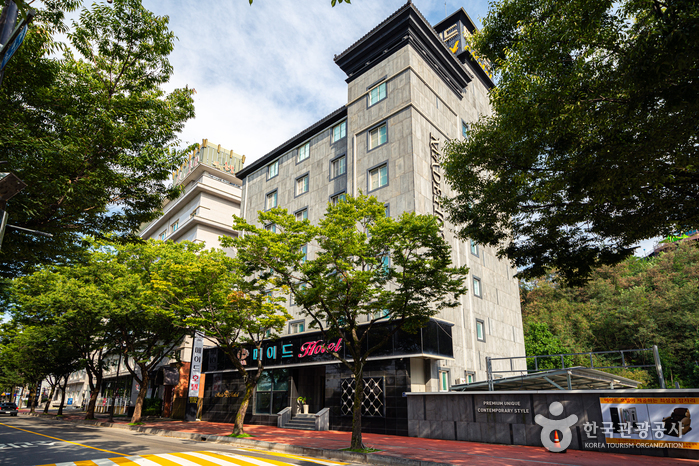
Made Hotel (메이드호텔)
2025-07-24
110, Sori-gil, Namwon-si, Jeonbuk-do
Located in Eohyeon-dong, Namwon, Jeonbuk-do, Made Motel is a 7-story building with 35 guestrooms. It's very conveniently located since it's only 10 minutes away from Chunhyang Theme Park and Gwanghalluwon Garden on foot. While most of the guests come here for the beautiful night view and relaxation, many of the guests are business travelers because there are many wind power stations nearby. For this reason, the motel has a printer and a fax machine for the business travelers. The motel has a team of cleaners to make sure that all the rooms are clean and organized at all times. There is a microwave oven and a free drip coffee machine next to the front desk so that guests who are in a hurry can have a simple snack.
![NocWoonJae [Korea Quality] / 녹운재 [한국관광 품질인증]](http://tong.visitkorea.or.kr/cms/resource/71/2049271_image2_1.jpg)
NocWoonJae [Korea Quality] / 녹운재 [한국관광 품질인증]
2024-10-15
472-18, Songgwangsuman-ro Soyang-myeon, Wanju-gun, Jeonbuk-do
+82-10-4450-6565
'As a traditional Korean house with floor area of 99m², Nocwoonjae has been in business since 2014 in Oseong Hanok Village, Wanju-gun, Jeollabuk-do. The name 'Nocwoonjae' means 'a house with a green cloud hanging over it' in Korean. It was named as such because of the green broad-leaved and coniferous trees along the foot of the mountain in the vicinity of the guesthouse. The entrance way is lined with flowers and trees, leading to two Korean houses connected by an open hallway. The guesthouse is owned by two sisters who built this place after staying at many of the popular 'hanok (traditional Korean house)' guesthouses in other parts of the country. It was a dream come true for them, so they did everything in their power to make their place perfect by choosing the building materials themselves, even the tiles. Because the exterior walls are made of red clay and tiles, it's cool in summer and warm in winter. There is also a large wooden floor hall where guests can enjoy the nature. The rooms are decorated with embroidered cotton sheets and antique furniture. Both of the sisters are amateur oriental painters specializing in painting the 'Four Gracious Plants (Plum, Orchid, Chrysanthemum, and Bamboo)', so they even made the lamps with traditional Korean paper with their paintings on them. Indeed, they did everything they could to make this place as pretty as possible.
The two traditional Korean houses named Naunchae and Unachae are built on a natural slope without harming the nature. The two houses are connected by a hallway with windows, so guests can sit on the staircase to enjoy the view outside. The 'Naunchae,' which means 'silky cloud' in Korean, consists of a room, an attic, a kitchen, a hall, and a bathroom. From the attic, you can have a great view of the trees and pine grove through the window. Right behind the house are the strawberry garden and stone walls for the guests to relax. The walls and floor of the room are made of red clay and natural wood with a pleasant natural aroma, which is good for the mind and body. The kitchen walls are made of colorful tiles and wood, with a large window right next to it offering a great view of the pine grove. In the main hall, guests can throw open the large window and lay on the wooden floor to look at the nature and enjoy the breeze.
The 'Unachae,' which means 'beautiful cloud' in Korean, consists of tea room, guestroom, kitchen, hall, and bathroom. It's very similar to the 'Naunchae,' except for the long window next to the kitchen and a table underneath it. The guesthouse sometimes offers special discounts, so be sure to ask about them when booking a room.
There are different types of flowers in the front yard, including cosmos, rose moss, and cockscomb. The sisters also grow corn, sorghum, strawberries, persimmon, jujube, and plum trees there. In the harvest season, guests can pick and try the fruits and vegetables. The sisters also offer a number of experience programs, such as Oriental painting class where you can grind the ink stick and paint the Four Gracious Plants on traditional Korean paper and tea class where you can try the tea made of the persimmon leaves and flowers grown by the owners. Breakfast includes toast, jam, and milk. There is a kitchen, so you can cook whatever you want. Popular tourist destinations in the vicinity of the guesthouse include Songgwangsa Temple and Wibongsa Temple as well as the 60m-high Wibong Falls, one of the Eight Views of Wansan Mountain. Jeonju Hanok Village is a 20-minute ride from the guesthouse.
![Namwonyechon by Kensington [Korea Quality] / 남원예촌 [한국관광 품질인증]](http://tong.visitkorea.or.kr/cms/resource/25/2556425_image2_1.jpg)
Namwonyechon by Kensington [Korea Quality] / 남원예촌 [한국관광 품질인증]
2024-04-07
17, Gwanghanbuk-ro, Namwon-si, Jeonbuk-do
+82-10-2275-1406
'Namwon Yechon is a 'hanok (traditional Korean house)' with 24 individual guestrooms built by the City of Namwon on a 40,000m² area. Despite being a 'traditional' Korean house, the guestrooms are designed to be comfortable like those of a hotel, since they have a bed and other necessary furnishings. The guesthouse also has guestrooms with a main floored room, which is very popular among the guests staying there in the hot summer. The Royal Suite Rooms have a separate bathroom in both the floor-heated room and room with a bed, making it possible for two families to stay in the same place. In the winter, the floor-heated rooms are heated by burning oakwood, and guests can experience how the rooms were heated in the old days in Korea. The guesthouse offers various traditional programs such as 'hanbok (traditional Korean clothes)' experience, pansori, gayageum, DIY, and traditional plays, most of which charge no participation fee. Guests are given a 'Horse Badge'(Mapae) that serves as a ticket to Gwanghalluwon Garden, Chunhyang Theme Park, and Baekdu Daegan Education Center. Drinks in the mini bar in each of the guestrooms are free.
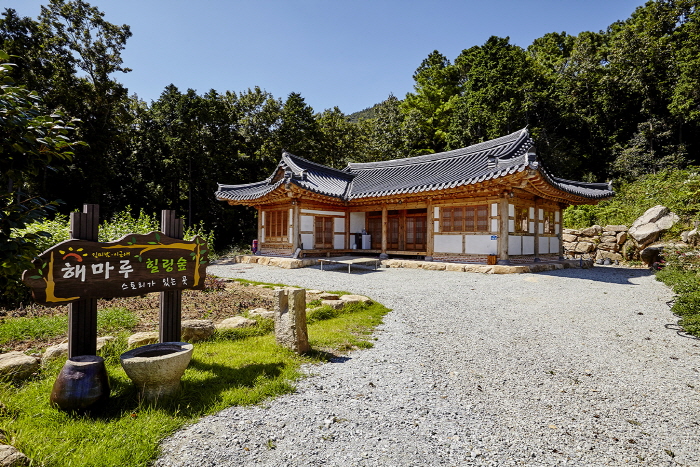
Haemaru Healingsoup (해마루 힐링숲)
2026-08-20
108-35, Donghae-gil, Haenam-gun, Ciudad Metropolitana Especial de Jeonnam-Gwangju
Haemaru Healing Forest is a guesthouse situated at the foot of Duryunsan Mountain, Haenam in front of Wondo Beach and surrounded by a cypress grove. The mountain, cypress grove, and beach are all visible from the main floored hall room. For this reason, many of the guests who stayed here say that the picturesque view seems to change day by day. The town where the guesthouse is located is specially designed as a 'hanok village,' consisting mostly of traditional Korean houses of Jeonnam-Gwangju. It is also widely known as 'Haenam Kimchi Village' because of their famous cabbages, which are grown in the natural environment and are used to make kimchi. Specifically, there are three villages in this area: 'Green Experience Village,' 'Farm Stay Village,' and 'Resort Village.' There is a public swimming pool in the area managed by the villagers and is very popular among visitors, with ticket sales reaching KRW 100,000,000 a year. One of the advantages of staying at this guesthouse is that it’s within a one-hour ride to a number of popular nature destinations such as Wando Cheongsando Island, Gangjin Dasan Chodang, Jangheung Cheongwansan Mountain, Woodland, and Yeongam Wolchunsan Mountain. Haenam is known as one of the best regions of Korea for enjoying the famous Jeolla-do cuisine, so visitors to Haenam are advised to try the local food. The villagers built these traditional Korean guesthouses so that their visitors can have a day of relaxation in nature, away from their hectic city life. With this mind, they used natural pinewood and red clay from Gangwon-do to build authentic traditional Korean houses and utilized traditional Korean tiles from Goryeong. The name 'Haemaru Healing Forest' was given by the owner of the guesthouse, with the subtitle 'A place where you can tell your story.' The guesthouse buildings are in 'ㄱ' shape. The main building, called 'anchae' in Korean, has floor area of 72m², which is big enough for up to 25 people. There are two rooms, a large living room, and a kitchen in this building. The rooms are furnished with sofa, television, air conditioner, refrigerator, and table just like an ordinary home so that guests can feel at home during their stay. The 'bakkatchae,' or 'detached house,' is a single room with capacity of 6 and is furnished with air conditioner and bathroom. The guesthouse is owned by a couple who still work in Seoul and need to travel back and forth between Seoul and Haenam frequently. They're both nature lovers, so their most favorite place in the house is the kitchen garden where they cultivate their own organic lettuce, perilla leaves, and chili peppers. The kitchen garden is open to guests who want to try the homegrown organic vegetables. Various experience programs are offered here as well, such as yunnori, dadeumi, jwibulnori, and kimchi making. Jwibulnori is a traditional Korean game played on the eve of Daeboreum or First Full Moon Day, where people burn dry grass on the ridges of rice paddies and fields and others spin cans of flames attached to the end of a stick or a sling. For safety reasons, this game is played with the consent and participation of the villagers, so be sure to ask the owner of the guesthouse when the game is played. It’s free for groups of more than 10 people. As for the kimchi-making class, it is offered by the guesthouse owner's younger brother and sister-in-law who live and run a kimchi factory in the village. They will teach you how to make kimchi, step-by-step, start to end. The kimchi-making class is a paid program, so be sure to ask the guesthouse owner how much and when the class is held.

Dahyang Sochuk (다향소축)
2026-08-20
7-5, Dasanchodang 1-gil, Doam-myeon, Gangjin-gun, Ciudad Metropolitana Especial de Jeonnam-Gwangju
Dahyang Sochuk, near the Dasan Chodang historic site in Gangjin, Jeonnam-Gwangju, is a traditional hanok homestay that feels like a local museum. All rooms are red clay-walled, and have naturally dyed bed linen. Large and small flowers bloom around the house, and in the yard are many strangely-shaped bonsai in pots, creating a refined and relaxing atmosphere. Wild green tea grows locally, so tea ceremonies are often arranged.
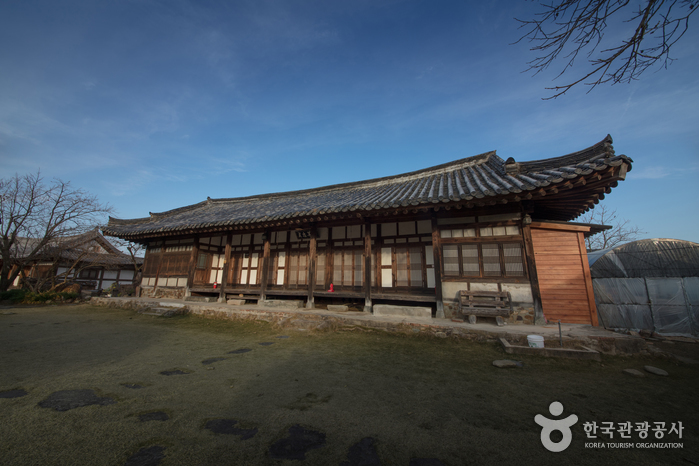
Gotaekhanok / 고택 한옥에서
2026-06-30
88-9, Doldam-gil Changpyeong-myeon, Damyang-gun, Ciudad Metropolitana Especial de Jeonnam-Gwangju
Hanok Pension is an old traditional Korean house located in Samjinae Village, Changpyeong-myeon, Damyang-gun, the first village in Asia to be listed as a 'Slow Village.' It has 15 guestrooms in traditional Korean house buildings along a stone-wall road just like in the old days in Korea. The guesthouse is conveniently located for those planning to visit Juknokwon (Bamboo Garden) and Metasequoia Street, which is regarded as the most beautiful street in Korea, because they are all within 30 minutes away from the guesthouse on foot. The old traditional Korean house consists of one main building and two detached buildings, between which is a large front yard. The two detached buildings are divided into different sections for the guests to stay in. You will see lots of different wild flowers in and around the premises. The tea room is another popular feature of the guesthouse because of the calming atmosphere.

The First Stay Hotel (더퍼스트스테이 호텔)
2025-07-23
23, Magokdong-ro 4-gil, Gangseo-gu, Seoul
The First Stay Hotel, located in Magok-dong, Gangseo-gu, Seoul, is chosen by many frequent business trippers as well as domestic and foreign travelers because of its modern styling, practical prices, and convenient transport links. Gimpo Airport is 10 minutes and Incheon International Airport just 30 minutes away, while subway and bus stops are within a 5-minute walk. The hotel has ample parking space, and self-catering is possible in some rooms.
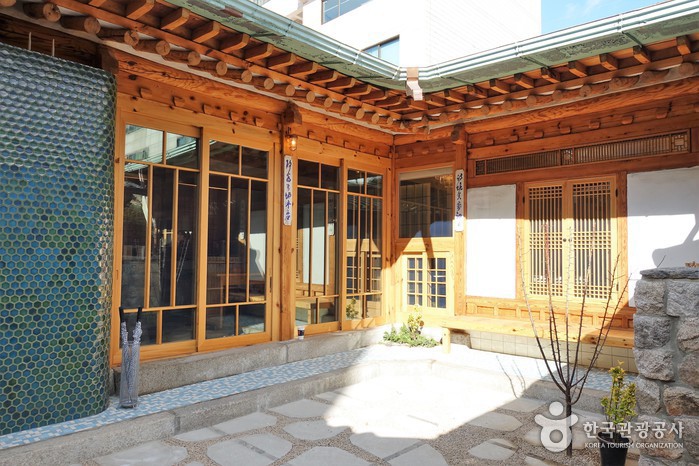
Hyehwa1938 / 혜화1938
2025-08-12
7, Sungkyunkwan-ro 16-gil, Jongno-gu, Seoul
Located in (no suggestions)-dong of Seoul, Hyehwa 1938 is a lodging facility which is based on the remodeling of an 80-year- old traditional Korean house. A traditional Korean house expert initially wanted to use it as an office but later decided to turn it into a guest house due to its large size. As a result, the unique beauty of traditional Korean house was revived while improving practicality. The Woojeong room and Sarang room are now resized to accommodate max 8 persons which used to be only max 4 in the past. Despite the remodeling, the aura and atmosphere of the traditional Korean house is well preserved. Inside the room, you can see that the chandelier of the rich house in the '30s are accompanied by modern furniture and electronics which maintain unique harmony. Open the windows to see sansuyu and maehwa along with other various seasonal trees with beautiful colors and also the space such as edges and sewers are well arranged to avoid any discomforts with your eyesight. The heart of architecture offers only two rooms for guests, and you are all welcome to enjoy the true beauty of Korea.
![GLOBAL STAY[Korea Quality] / 글로벌스테이[한국관광 품질인증]](http://tong.visitkorea.or.kr/cms/resource/86/2557386_image2_1.jpg)
GLOBAL STAY[Korea Quality] / 글로벌스테이[한국관광 품질인증]
2023-04-13
239-301, 57-37, Jingwan 2-ro, Eunpyeong-gu, Seoul
+82-2-383-7377
'Global Stay is a BNB-style guesthouse. The first thing that will catch your eye is the terrace designed to suit the season. It’s the pride and joy of the guesthouse owner, a Certified Table Coordinator who acquired a license in Japan. He developed the hobby during his frequent visits to Japan and Europe. He designed the terrace himself so that his guests can have a pleasant experience in color therapy during their stay. He even changes the decorations in the guestroom if the same guest stays there for more than two days. He also serves hotel-style breakfast and snacks. As a former Japanese instructor, he serves as a tour guide and a Korean instructor for Japanese tourists as well. He wants to turn his guesthouse into something more than just a place to lodge, so he does everything in his power to make sure his guests have a comfortable stay. No wonder, he has many repeat customers.
 Español
 한국어
한국어 English
 日本語
日本語 中文(简体)
 Deutsch
 Français
 Русский


