
Jogyesa Temple (조계사(서울))
14.8Km 2024-10-25
55 Ujeongguk-ro, Jongno-gu, Seoul
As the main temple as well as the district head temple of the Jogye order in Seoul, Jogyesa Temple is the center of Korean Buddhism. The temple was built in the late 14th century during the Goryeo period but was completely destroyed in a fire. It was rebuilt under the name of Gakwangsa Temple in 1910 with the effort of many respectful monks, namely Han Yong-un and Lee Hee-gwang. The temple was given a role as the head temple of Korea’s Buddhism and renamed to Tegosa Temple in 1936. In 1954, a purification drive took place to eliminate Japanese influence and revive traditional Buddhism, which established the present day Jogyesa Temple as a result.
Jogyesa Temple plays an important role in Korean Buddhism as the head temple of the Jogye order. Jogyesa Temple’s Dharma Hall serves as the main venue for several Buddhist events, holding rituals, lectures, ceremonies, and other events all year long. The annual lantern festival in celebration of Buddha's birthday also takes place at this temple.
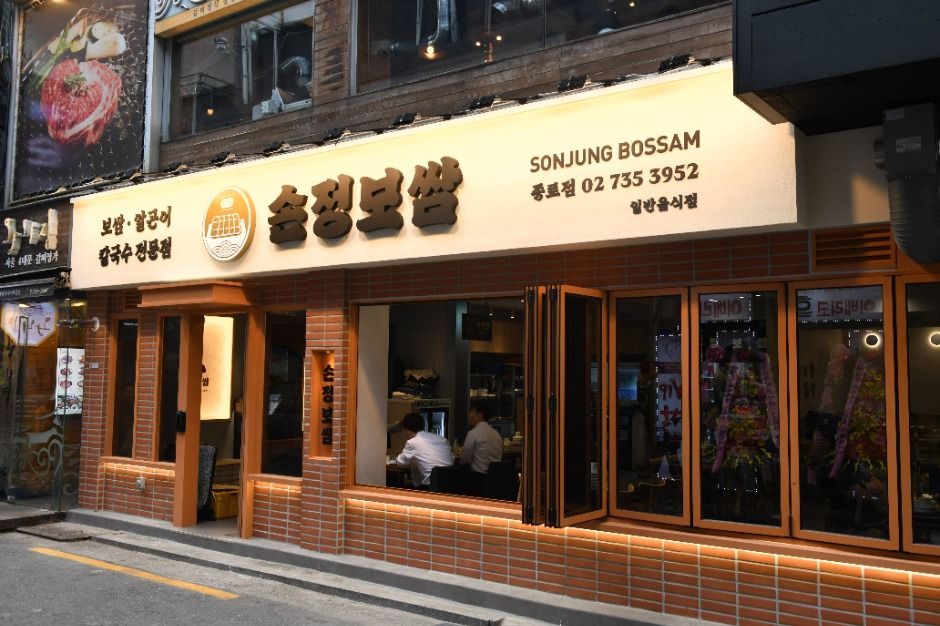
Sonjung Bossam (손정보쌈)
14.8Km 2025-07-25
24 Samil-daero 15-gil, Jongno-gu, Seoul
Sonjung Bossam offers dishes with a modern touch by reinterpreting traditional meals. Passed down for three generations, this restaurant values sincerity and careful attention in food making in order to serve every customer a heartwarming meal. Sonjung Bossam's signature dish Premium Gabri Bossam takes only the rarest pork cut, the blade-end fatback called "gabri" in Korean, and boils the meat using the restaurant's secret recipe for tender, juicy meat. The restaurant also serves their own special version of spicy stir-fried fish roe and intestines and haemultang (spicy seafood stew), boasting a generous amount of various seafood and rich broth. All meals are prepared wholeheartedly as if they are being served to a family.
![Saeki P&C [Tax Refund Shop] (세기피앤씨)](http://tong.visitkorea.or.kr/cms/resource/68/2878668_image2_1.jpg)
Naeunhospital (나은병원)
14.8Km 2025-10-23
23 Wonjeok-ro, Seo-gu, Incheon
Naeun Hospital is a large general hospital with a high-quality medical system that is on par with university hospitals' scale and quality of care. We have advanced digital medical equipment such as MRI, MD-CT, SONO, and electronic chart software.
Additionally, Naeun Hospital has been recognized as a certified medical institution by the Health Insurance Review and Assessment Service, receiving certification in the first cycle (2013), second cycle (2017), and third cycle (April 2021) of the general hospital accreditation program, confirming its status as a safe medical institution with the highest level of medical care. Furthermore, the hospital has demonstrated its objective credibility by achieving a first-place national ranking in the quality assessment for acute stroke, earning Platinum status from the World Stroke Organization (WSO), and ranking 16th nationwide in the Patient Experience Survey.
In addition, Naeun Hospital operates three high-end health screening centers located in Gajwa, Songdo, and Geomdan. In response to the era of medical globalization, the hospital manages the Jian Health Promotion Center in Incheon Songdo International City, spanning 3,300 square meters, and the Gajwa Health Promotion Center, which boasts the largest and most advanced screening system in the country.
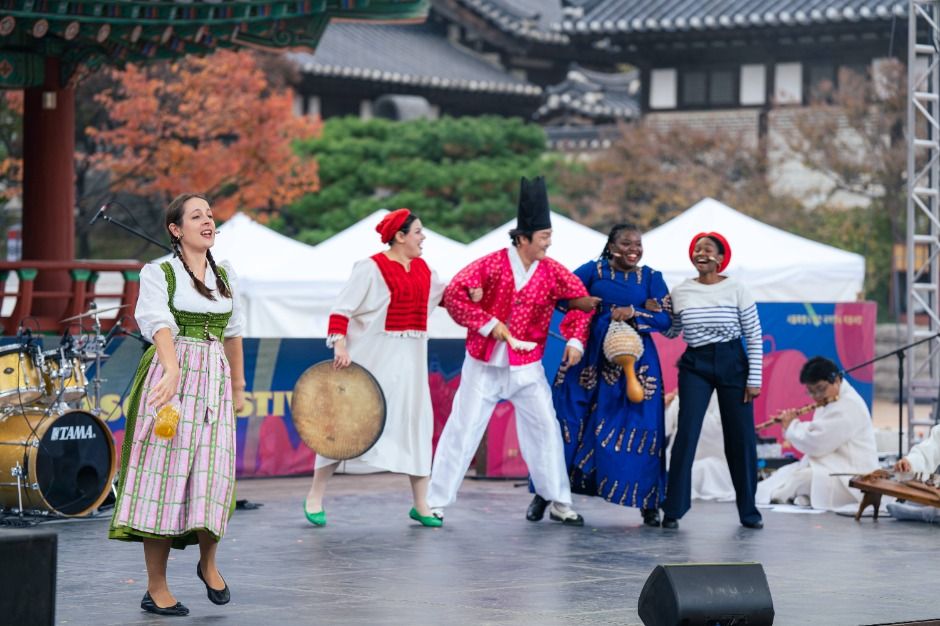
World Pansori Festival (월드판소리페스티벌)
14.8Km 2025-07-30
28 Toegye-ro 34-gil, Jung-gu, Seoul
+82-2-904-2835
World Pansori Festival is an international music festival that aims to promote pansori, the traditional Korean epic chant, and its values. The festival consists of a variety of performances and concert programs based on its yearly theme. In addition, the festival also has interactive activities for the attendees, such as a free pansori lesson and arts-and-crafts, to make pansori and traditional Korean music more accessible to the public.
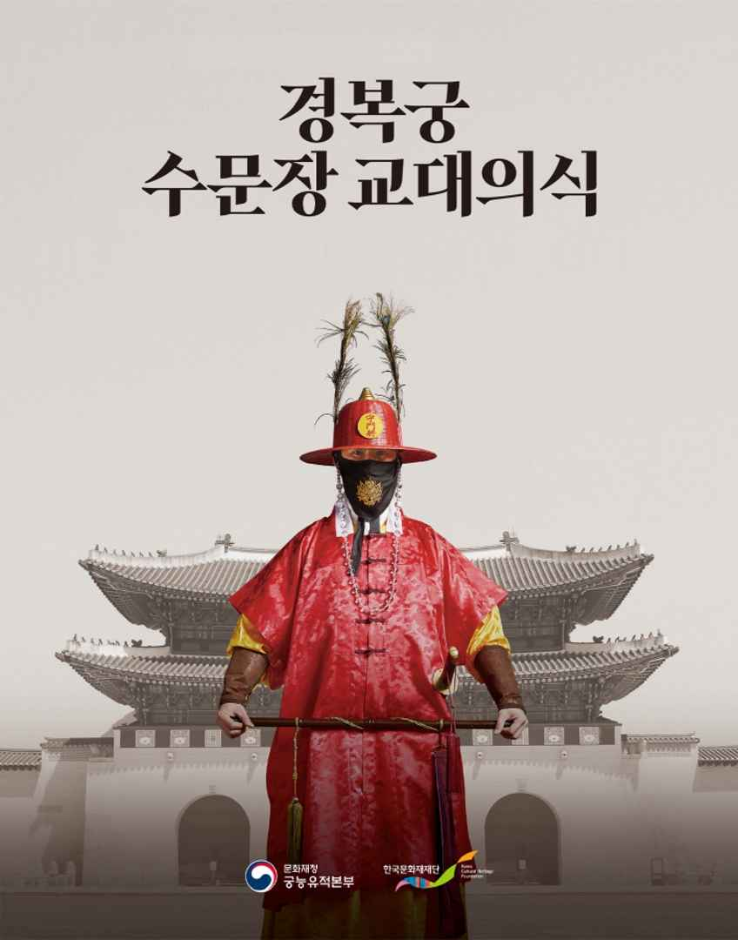
Palace Royal Guard Changing Ceremony (수문장 교대의식)
14.8Km 2025-07-11
161 Sajik-ro, Jongno-gu, Seoul
+82-2-3210-1645
In the Joseon dynasty, the royal guards of the palace were gatekeepers who were responsible for guarding the the main gates of Gyeongbokgung Palace as well as the main gates of the city such as Heunginjimun Gate and Sungnyemun Gate. The royal guards worked in shift duties and were in charge of opening and closing Gwanghwamun Gate. Before the royal guard system was enforced in 1469, the palace gates were protected by soldiers of the central army. The Palace Royal Guard Changing Ceremony held at Gyeongbokgung Palace and the Gwanghwamun area reenacts the guard-changing procedure that took place during the Joseon dynasty, along with the reproduction of costumes and weapons, based on historical records.
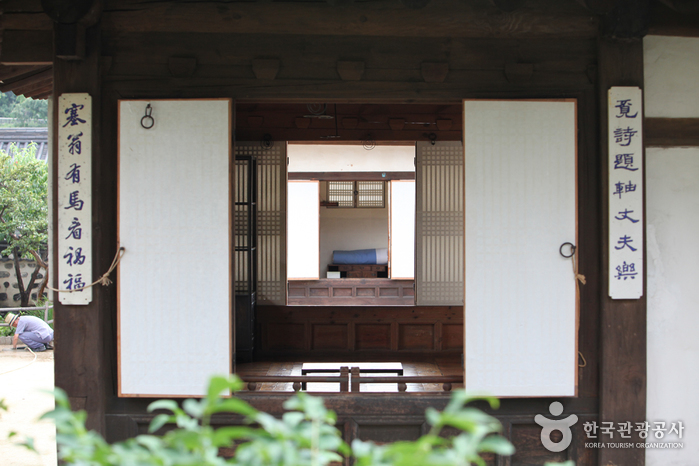
Haepungbuwongun Yun Taekyeong's Jaesil (해풍부원군윤택영댁재실)
14.8Km 2021-11-10
28, Toegye-ro 34-gil, Jung-gu, Seoul
+82-2-3396-5882
Haepungbuwongun Yun Taekyeong's Jaesil is a shrine house built by the father-in-law of King Sunjong of Joseon dynasty in 1906 when his daughter was proclaimed the crowned princess of Joseon and entered Changdeokgung Palace to later become Queen Sunjeong. Red pine trees salvaged from the demolition of Gyeongungung Palace were used to construct the house. It was originally located in Jegi-dong, Dongdaemun-gu, but was later restored and moved to its present location. The shrine of the house that was destroyed in 1960 was also restored.
Because the house is more of a shrine rather than residential living quarters, it has many unique features. For example, unlike other houses, it has the anchae (women’s quarters) located across from sarangbang (men’s quarters) with daecheong (living room) positioned between them.
![Himart - Bulgwang Branch [Tax Refund Shop] (하이마트 불광점)](http://tong.visitkorea.or.kr/cms/resource/66/2889966_image2_1.jpg)
Himart - Bulgwang Branch [Tax Refund Shop] (하이마트 불광점)
14.8Km 2024-04-22
766, Tongil-ro, Eunpyeong-gu, Seoul
-
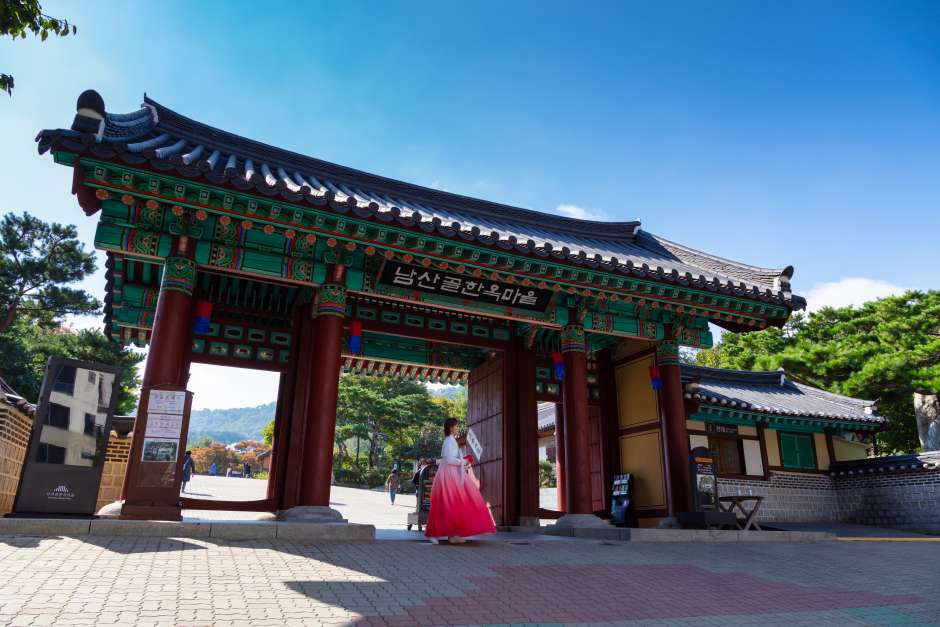
Namsangol Hanok Village (남산골한옥마을)
14.8Km 2025-07-14
28 Toegye-ro 34-gil, Jung-gu, Seoul
Namsangol Hanok Village opened in 1998 on the northern side of Namsan Mountain in the center of the capital. This village has five restored hanok (traditional Korean house) premises, a pavilion, a traditional garden, a performance art stage, and a time capsule plaza, making it a perfect spot for locals and tourists to take a leisure walk. Upon entering from the front gate, visitors will get a taste of Korea's traditional life while escaping from bustling city life. The traditional garden with its pavilion and old houses creates a peaceful ambiance before the forested Namsan Mountain. A time capsule commemorating Seoul’s 600th anniversary was buried in 1994 at the highest point of the village and is scheduled to be reopened 400 years later in 2394.
The five hanok premises at Namsangol Hanok Village once belonged to aristocrats and government officials of the Joseon dynasty. Each house was originally located in a different neighborhood, but they were all moved to this area and restored to their original form. The houses were rebuilt using their original materials, except for one house, where the materials were too old and deteriorated to be reused. The premises were carefully restored and replicated according to their original form to depict the owners’ social class and personality. These buildings are now used as an exhibit to portray the living environment during the Joseon dynasty and as a venue for educational and cultural programs for children and tourists.
Some of the unique programs and activities to participate in include wearing hanbok, folding hanji (traditional Korean paper), writing in Korean, traditional tea ceremony, traditional etiquette school, and herbal medicine experience. There are also taekwondo demonstrations and other various performances held around the village. Visitors can also try traditional games such as yunnori (traditional board game), or understand more about the area through a guided tour.
Imun Seolnongtang (이문설농탕)
14.9Km 2025-06-18
38-13 Ujeongguk-ro, Jongno-gu, Seoul
+82-2-733-6526
Imun Seolnongtang has been serving its hearty seolleongtang for over a hundred years since it first opened in 1907. Even its name has a long history: the word imun comes from Imun-gol, the now-obsolete name of the restaurant’s location, and seolnongtang, an old variation of the word seolleongtang. During the Japanese colonial rule, the restaurant’s regular customers included Gijeong Son, the marathon gold-medalist at the 1936 Berlin Olympics. The meal served at this restaurante is reputed to stay consistent from the Japanese colonial period.
 English
 한국어
한국어 日本語
日本語 中文(简体)
 Deutsch
 Français
 Español
 Русский


