
Sinheungsa Temple (Seoraksan Mountain) (신흥사(설악산))
14.9Km 2024-03-12
1137 Seoraksan-ro, Sokcho-si, Gangwon-do
Sinheungsa Temple is a temple located in Seoraksan Mountain near Sokcho. It belongs to the Jogye Order of Korean Buddhism. It was originally founded as Hyangseongsa Temple by the monk Jajang in the Shilla dynasty (A.D. 652). Within the temple grounds, cultural heritage sites such as Geungnakbojeon Hall, a wooden structure from the mid-Joseon period, and the Three-story Stone Pagoda at Hyangseongsa Temple Site. The temple offers a templestay program where visitors can experience temple life firsthand. Participants can engage in various activities such as Buddhist ceremonies, Buddhist prayer, 108 prostrations, and lotus lantern and rosary making.
Seoraksan Cable Car (설악산 케이블카)
15.4Km 2024-04-08
1085 Seoraksan-ro, Sokcho-si, Gangwon-do
A ride on the Seoraksan Cable Car is the best way to enjoy the unexplored regions of Seoraksan Mountain. The cable car station is located in Seoraksan National Park, and it takes about 10 minutes to reach Gwongeumseong Fortress, which is 700 meters above sea level. Since one-way tickets are not available, passengers must purchase a round-trip ticket. From the cable car window, passengers can see famous attractions like Ulsanbawi Peak and Manmulsang Rocks. From Gwongeumseong Fortress, passengers can take in a panoramic view of Seoraksan Mountain. Seoraksan Mountain, seen from the top of Gwongeumseong Fortress, is majestic and mysterious with unique rock formations. Upon reaching the top of the mountain, the entire scenery of Outer Seorak unfolds before one's eyes. Visitors will be amazed by the Allak Hermitage from the Silla dynasty and the Muhagsong Pine Tree, which has survived for hundreds of years just below Gwongeumseong Fortress. There are many tourists on weekends, public holidays, and fall foliage season, so visitors are advised to plan ahead.
Seoraksan National Park (Outer Seorak) (설악산 국립공원 (외설악))
15.9Km 2024-04-08
1 Daecheongbong-gil, Yangyang-gun, Gangwon-do
Seoraksan Mountain is renowed for its natural splendors and breathtaking views. It holds the distinction of being Korea's first UNESCO Biosphere Reserve and is also listed on the IUCN Green List. The mountain is divided into Inner Seorak, South Seorak, and Outer Seorak, which includes Daecheongbong peak (1,708 meters above sea level), ranking as the third highest peak in Korea. The area is celebrated for its popular hiking trails, with the sunrise and sunset views from the top being particularly spectacular.
Seoraksan Gwongeumseong Fortress (설악산 권금성)
15.9Km 2024-02-28
1091 Seoraksan-ro, Sokcho-si, Gangwon-do
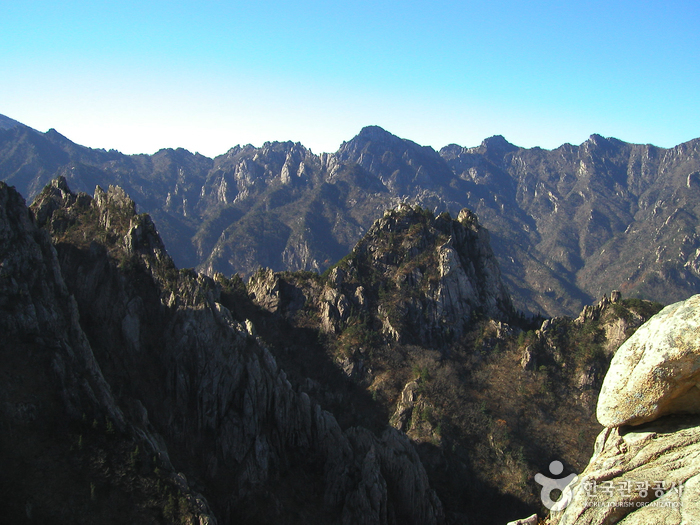
Gwongeumseong Fortress is a stone castle from the Goryeo dynasty and is located 800 meters above sea level in Seoraksan National Park. From a distance, Gwongeumseong Fortress looks like a rising peak, while up close, the expansive stone floor and remnants of castle walls become visible. Visitors can access the fortress via hiking trails or by taking a cable car. From the fortress, visitors can enjoy the majestic view of Seoraksan Mountain and the blue waters of the East Sea.
Del Pino Hotel & Resort Ocean Play (델피노호텔&리조트 오션플레이)
16.0Km 2024-02-22
1153 Misiryeongyet-gil, Toseong-myeon, Goseong-gun, Gangwon-do
Del Pino Hotel & Resort Ocean Play is a themed water park where visitors can enjoy water playground and spa treatments with hot spring water all year round. It features indoor and outdoor zones, hot springs, and open-air baths. For children, there are Kids' Play Pools, a Kids' River, and an Outdoor Infinity Pool with shallow depths. The indoor area offers panoramic views of the Sokcho coastline through expansive floor-to-ceiling windows.
Seoraksan Osaek Jujeongol Valley (설악산 오색주전골)
16.5Km 2024-02-29
Yaksu-gil, Seo-myeon, Yangyang-gun, Gangwon-do
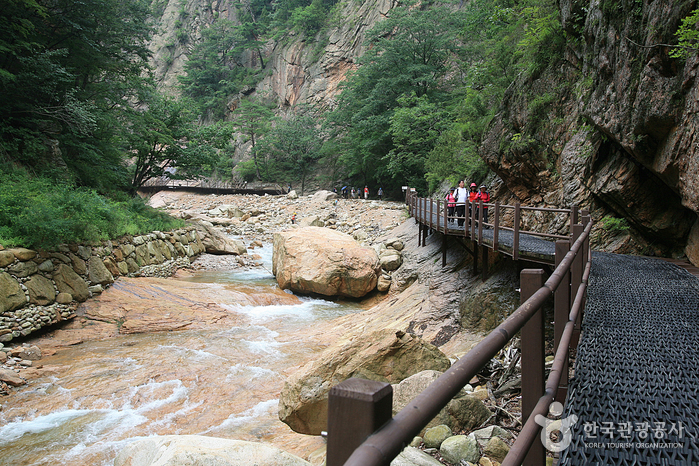
Osaek Jujeongol Valley in Seoraksan Mountain is renowned for its vibrant autumn maple leaves. The area features a 7-kilometer trail stretching from Oksaek Mineral Spring to Yongsopokpo Falls, accessible to all visitors. The valley boasts stunning scenery, with a mix of valleys and rock formations. When the autumn leaves begin to change colors, the landscape turns into a breathtaking masterpiece.
Osaek Green Yard Hotel (오색탄산온천)
16.5Km 2023-10-27
34 Daecheongbong-gil, Seo-myeon, Yangyang-gun, Gangwon-do
Osaek Green Yard Hotel offers Holon Immunity Wellness, a health experience that focuses on Holon immunity, wellbeing, happiness, and fitness. The hotel is located in a forest at an altitude of 647 m, perfect for rest and relaxation. The hotel also uses natural mineral water with a 21.5-23% higher concentration of oxygen for speedy recovery. Guests can enjoy the view of Seoraksan National Park from their rooms.
Yukdampokpo Falls (육담폭포)
16.7Km 2021-07-14
Seoraksan-ro, Sokcho-si, Gangwon-do
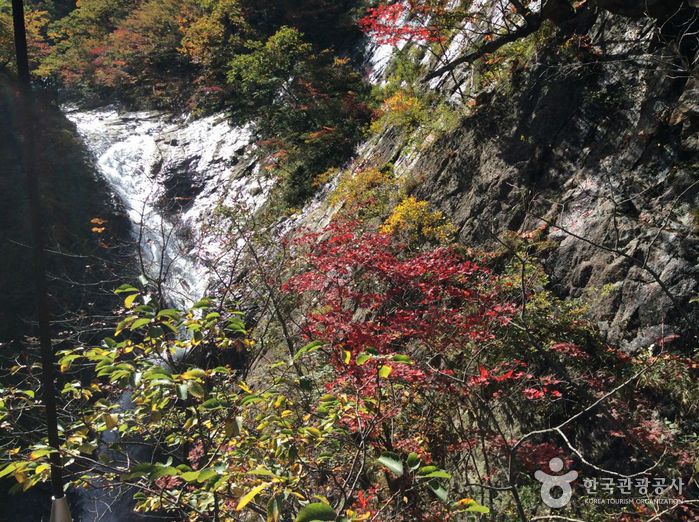
If you begin at Seorak-dong in Oeseorak, cross the Biryonggyo Bridge and pass by the Biryongpokpo Falls, you will reach Yukdampokpo Falls, which actually consist of six waterfalls and a pond.
Despite the fact that only a small amount of water actually flows in these waterfalls today, what is interesting, is how they came into existence: a slow-flowing stream of water eroded the rocks, creating dips and puddles at various levels, which later became a series of cascading waterfalls. The splendid scenery around the waterfalls is always a pleasing sight to the eyes of visitors.
Osaek Mineral Spring (오색약수터)
16.7Km 2022-12-22
Osaek-ri, Yangyang-gun, Gangwon-do
Osaek Mineral Spring is situated 20 kilometers west of Yangyang and 7.5 kilometers southeast from Hangyeryeong Pass. The water, which springs from three base rocks by a brook, is carbonated and rich in iron. Up to 1,500 liters of iron-rich water spring out on a daily basis. Osaek became well known due to the splendid landscape leading up to the mineral spring and its location on the way to the summit of Seoraksan Mountain.
X-game Resort (Naerincheon Bungee Jumping) (엑스게임리조트(내린천 번지점프))
16.8Km 2025-01-06
2254, Seorak-ro, Inje-gun, Gangwon-do
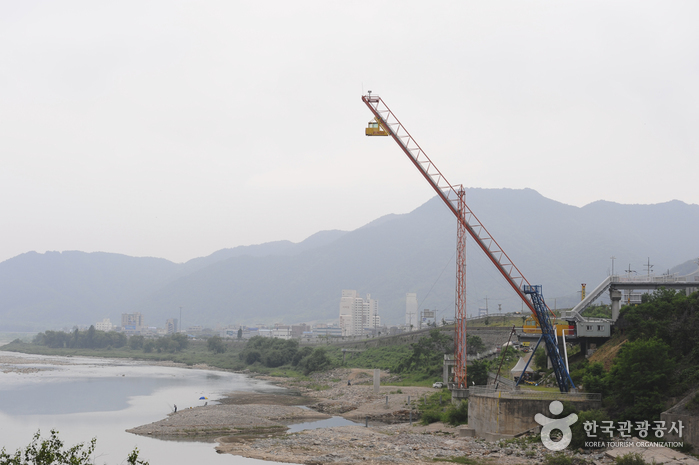
Situated in Inje-gun, Gangwon-do, X-game Resort Naerincheon (Stream) Bungee Jumping is a leaning tower style bungee jumping facility, like those common in Australia. To secure safety, the facility is tilted at 60 degrees and flanked by steel frames on both sides. Adopting technologies employed by Bungee Big, a renowned company in Australia, it offers one of the safest bungee jumping experiences for visitors. The 63 meter high jump platform will give visitors a thrill as they jump towards the stream below.
For those who have fear of bungee jumping, try Slingshots, that shoots up to the sky. They are easily accessible and ideal for family visitors and couples. Two people at a time can ride the slingshots, and there are two towers (30 meters high) supporting slingshots on both sides. Shot from the bottom, slingshots can fly one and half times as high as the x_height of the jumping facility. Flying over 45 meters in a matter of seconds, slingshots offer extreme thrills for friends, couples, or family visitors.
 English
 한국어
한국어 日本語
日本語 中文(简体)
 Deutsch
 Français
 Español
 Русский


