
Asan Medical Center (서울아산병원)
12.0Km 2025-10-23
(Pungnap-dong), 88 Olympic-ro 43-gil, Songpa-gu, Seoul
Opened in June 1989, Asan Medical Center is the largest tertiary hospital in Korea with 2,764 beds. In 2023, we treated an average of 13,260 outpatients and 2,539 inpatients per day, and performed 70,892 surgeries throughout the year.
With three specialty hospitals–Cancer Institute, Heart Institute, and Children's Hospital–and more than 50 specialized centers, we lead the world in cancer, organ transplantation, and cardiac care. In recognition of our efforts, we have topped the list of Korea's Most Admired Hospitals for 18 consecutive years and ranked NO. 1 in Korea for six consecutive years in U.S. Newsweek's World's Best Hospitals.
As a "quarternary hospital" serving critically ill patients from Korea and abroad who come to us as their last hope, Asan Medical Center treats more than 20,000 international patients from around 100 countries, including the United States, United Arab Emirates, and Mongolia. Medical professionals from developed countries visit us to learn our advanced medicine. Over the past decade, more than 3,700 professionals from nearly 90 countries have visited us to learn the latest medical techniques.
Soma Museum of Art (소마미술관)
12.0Km 2023-04-13
424, Olympic-ro, Songpa-gu, Seoul
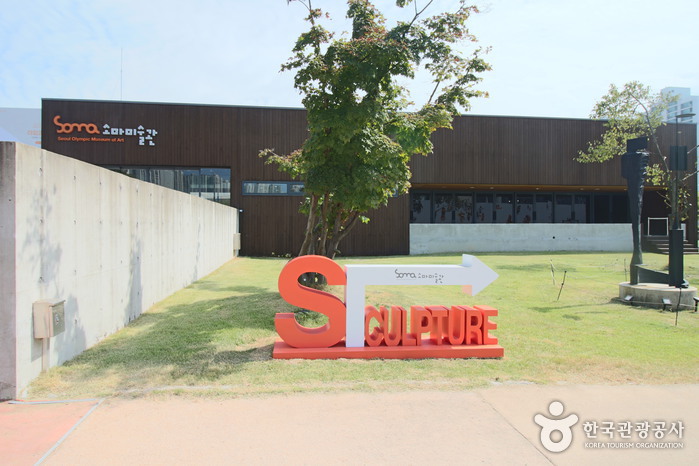
Soma Museum of Art was opened in September 2004 as a cultural space amid the nature of Seoul Olympic Park. The museum displays over 222 sculptures, and offers a variety of cultural and educational programs, including the nation's first drawing center and archive.
Seoul Mongchontoseong Earthen Fortification (서울 몽촌토성)
12.0Km 2024-03-12
424, Olympic-ro, Songpa-gu, Seoul
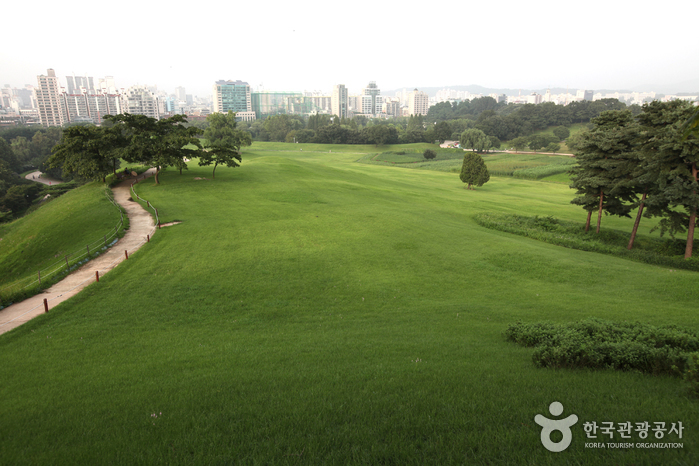
Mongchontoseong Earthen Fortification is an ancient earthen fortress built during the Hanseong period of the ancient Korean kingdom of Baekje (BC 18-AD 660). It is believed to have been constructed in the 3rd to 4th centuries. Utilizing the natural advantages of the Hangang River, it served defensive purposes with its trench and log barrier. Excavated relics from the Baekje era are on display at the Seoul Baekje Museum. The site is situated within the Olympic Park in Songpa, Seoul.
![[Seoul Trail Course 1] Suraksan · Buramsan Mountain Course ([서울 둘레길 1코스] 수락 · 불암산 코스)](http://tong.visitkorea.or.kr/cms/resource/16/2658216_image2_1.jpg)
[Seoul Trail Course 1] Suraksan · Buramsan Mountain Course ([서울 둘레길 1코스] 수락 · 불암산 코스)
12.0Km 2025-01-06
Junggye-dong, Nowon-gu, Seoul, Republic of Korea
Seoul Trail is a walking trail that encompasses the entire city of Seoul, with a total length of 157km and 8 courses. It weaves together the history, culture, and natural ecology of Seoul through various stories. The 1st course is a gentle path from Suraksan Mountain to Buramsan Mountain, covering 18.6km and taking approximately 8 hours and 10 minutes. This trekking course around Buramsan Mountain passes through Iris Garden, Deongneung-gogae, Information Center, Taereung Royal Tomb, Suamsa Temple, and Hakdoam Temple.
Mosim (모심)
12.0Km 2025-05-20
8 Gaeunsa-gil, Seongbuk-gu, Seoul
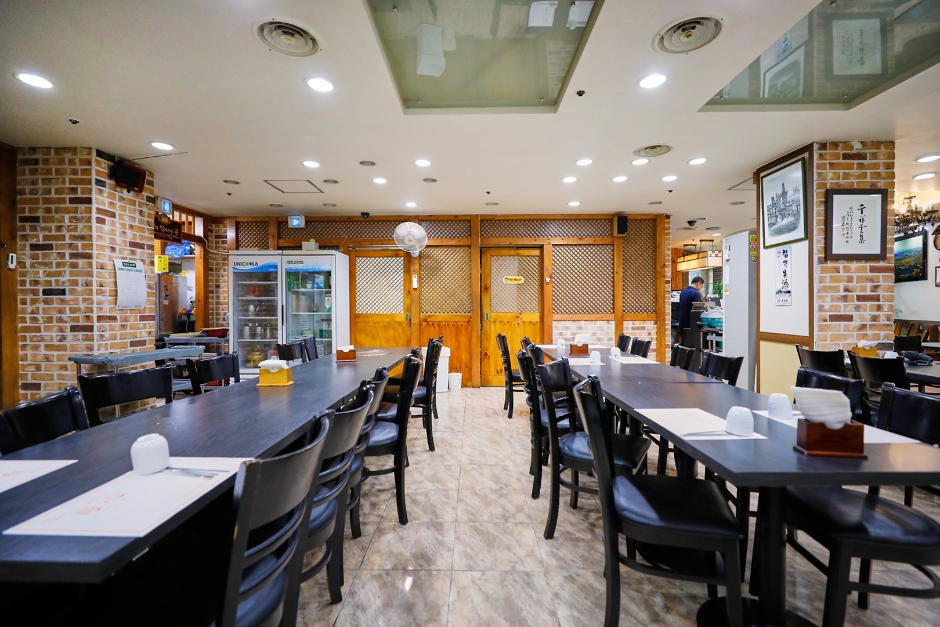
Mosim is a Korean table d’hote restaurant that offers a variety of menus to choose from depending on the kind of dishes and the number of side dishes. The set menu, which includes main dishes, such as hwangtae gui (grilled dried pollack) and galbitang (galbi soup), and side dishes, such as salad, japchae, and seasoned vegetables, is plentiful in amount and variety enough to fill the table. There are menu items that can be enjoyed individually, such as samgyetang, bibimbap, and yukgaejang (spicy beef soup). The restaurant’s menu comprises nutritious dishes that soothe one's tired mind and body. The restaurant has private rooms that can accommodate 4, 8, 12, 16, 20, 24, and 30 people, so it is a good option for guests seeking a quiet meal with the family or group gatherings.

Kansong House (간송옛집)
12.1Km 2025-04-01
149-18 Sirubong-ro, Dobong-gu, Seoul
The 100-year-old traditional hanok Kansong House sits by the burial mound of Kansong Jeon Hyeong-pil (1906-1962), who played a significant role in preserving the cultural heritages of Korea during the Japanese colonial period. This house was orginally built by Kansong's adoptive father Jeon Myeong-gi (1870-1919) to us as a storage facilities for harvested agriculture from the northern Gyeonggi-do and Hwanghae. After his father's death, Kansong used the house as a ritual house for his father and often stayed here. Some damages were done to the house during the Korean War, and partial repair was made after his death.
Korea University Anam Hospital (고려대학교 안암병원)
12.1Km 2025-10-23
73 Goryeodae-ro, Seongbuk-gu, Seoul
As a premier medical institution at the forefront of Korea's healthcare system, Korea University Anam Hospital integrates cutting-edge technologies into clinical practice. Our focus on precision medicine drives excellence in cancer and cardiovascular disease treatment, offering safe and accurate medical services through state-of-the-art robotic surgery and multidisciplinary care.
Our commitment to patient-centered care is evident in our ongoing investments to enhance our systems and capabilities. In 2008, we established the International Medical Center to serve our growing number of international patients better.
The International Medical Center offers services in English, Russian, Mongolian, and Arabic, ensuring that language barriers do not impede quality care. Additionally, our nutrition team develops global meal plans tailored to the diverse dietary needs of our international patients. For added convenience, we provide airport pick-up services, making the journey to our hospital as smooth as possible.

Olympic Park (올림픽공원)
12.2Km 2023-10-19
424 Olympic-ro, Songpa-gu, Seoul
Olympic Park is an impressive leisure facility in which historic remains from the Baekje era share space with modern, state-of-the-art sports stadiums, an eco-friendly forest, and spacious grass fields. The legacy of the 1988 Seoul Olympics, the park not only houses the country’s largest sports arena, but has also become a place where Seoul residents come to relax and unwind.
Spread across approximately 1.45 million square meters, Olympic Park encompasses the land that was once Mongchontoseong Fortress and Mongchonhaeja (manmade lake) from the early Baekje period. The park is divided into several zones, including a leisure sports park, a cultural art park, an eco-park, and the History Experience Park dedicated to the area’s rich historic heritage.
Because Olympic Park is so large and takes over three hours to explore, visitors are advised to familiarize themselves with entrances and exits and travel routes before they start. To further save time, visitors can ride the Road Train (“Hodori Train”) located next to Peace Square.
YOU&I Clinic Kundae (유앤아이의원 건대점)
12.2Km 2025-11-24
2nd Floor, 219 Achasan-ro, Gwangjin-gu, Seoul
YOU&I Clinic is a trusted dermatology and aesthetic clinic with extensive experience and expertise accumulated since 2006.
At YOU&I Clinic, we are committed to using authentic products, providing precise and honest treatments, and offering personalized services tailored to each individual’s needs.
We welcome clients not only from Korea but also from Japan, China, and Thailand, and offer Japanese and Chinese interpretation services. All foreign clients receive treatments at the same prices as Korean clients.
YOU&I Clinic specializes in lifting, petite procedures, and skin boosters, as well as a wide range of aesthetic skin treatments. We also provide thorough aftercare to ensure the highest level of satisfaction for every client.
KSPO Dome (Olympic Gymnastics Arena) (올림픽공원체조경기장)
12.2Km 2025-06-30
424 Olympic-ro, Songpa-gu, Seoul
The KSPO Dome was the arena built for gymnastic events during the 1988 Seoul Summer Olympics, but has been remodeled to host concerts, including for many K-pop stars and international pop stars. The dome can also serve as venue to a range of other events, including showcases, exhibitions, and business events. It is accessible via public transit using Olympic Park Station on Seoul Subway Lines 5 and 9.
 English
 한국어
한국어 日本語
日本語 中文(简体)
 Deutsch
 Français
 Español
 Русский


