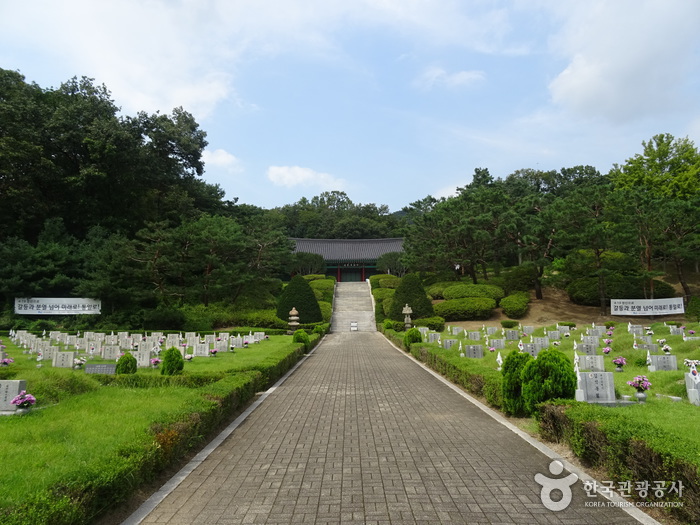
April 19th National Cemetery (국립4.19민주묘지)
10.4Km 2023-01-02
17, 4.19-ro 8-gil, Gangbuk-gu, Seoul
+82-2-996-0419
Located at the foot of Bukhansan Mountain, the April 19th National Cemetery was established in memory of the 224 people who lost their lives during the 4.19 Revolution in 1960. The cemetery features a memorial hall and a traditional wooden structure that houses the grave of the historic figure Yu Yeongbong.
At the cemetery is a pond surrounded by sculptures such as "Symbolic Door," "Roots of Democracy," and "Sparks of Justice" and a memorial tower bearing an inscription for the brave patriots who lost their lives during the revolution. Groves of pine, juniper, yew, and maple trees and the well-kept hiking path add a natural charm to the overwhelming ambiance of peace and serenity. Many people visit to see the spring blossoms in May, and throughout the year to take in the glorious scene of the sunset over Bukhansan Mountain.
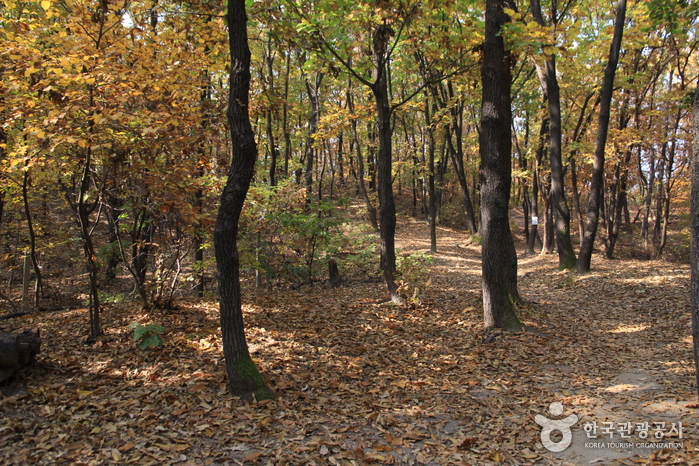
Dobongsan Mountain (도봉산)
10.6Km 2021-06-29
Dobong-dong, Dobong-gu, Seoul
+82-2-954-2566
Dobongsan Mountain, located in the northeastern section of Bukhansan National Park, is known for the magnificent rock formations of the main peak, Jaunbong Peak (740.2 m), as well as Manjangbong, Seoninbong, Jubong, Obong Peaks and Uiam Rock. Seoninbong Peak in particular has 37 hiking courses, including the famous Bakjwi (Bat) Course.
The mountain is also home to Cheonchuksa Temple, the oldest temple in the region, and several other temples including Mangwolsa and Hoeryongsa Temples, as well as a number of beautiful valleys such as Dobonggyegok, Songchugyegok, Obonggyegok and Yeongeocheongyegok Valleys. Dobongsan Mountain is easily accessible by public transportation, making it a popular attraction for people living in Seoul.

Amsa-dong Prehistoric Site Museum (암사동선사유적박물관)
10.7Km 2023-12-22
875 Olympic-ro, Gangdong-gu, Seoul
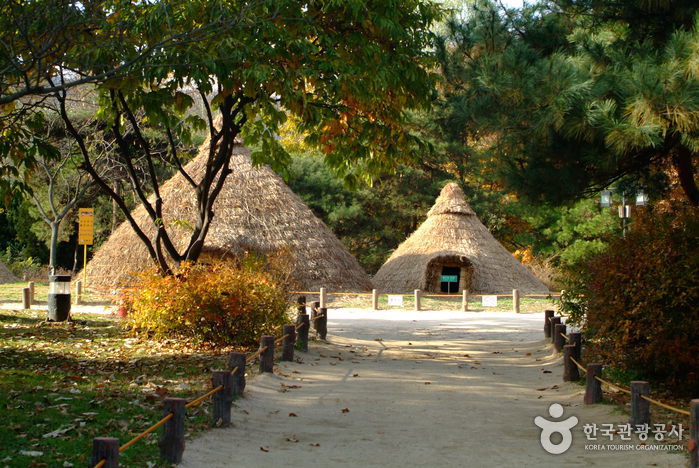
The archaeological sites in Amsa-dong, Seoul, were a collective settlement where people lived during the Neolithic Age about 6,000 years ago and became known to the world after the sand dunes along the Hangang River caved in during the great flood of 1925, exposing numerous pieces of comb-patterned pottery. The area designated as a historic site in 1979, and excavation of the site took place from 1981 to 1988. The cultural heritage protection area was expanded to a total area of 78,133㎡. Currently, nine Neolithic dugout huts and one experiential dugout hut have been restored. The exhibitions currently open to the public are Exhibition Hall 1, which displays a restoration of a Neolithic Age dugout, and Exhibition Hall 2, which displays various panels and models to help understand the prehistoric era as a whole.
Archaeological Site in Amsa-dong, Seoul (서울 암사동 유적)
10.7Km 2021-07-27
875, Olympic-ro, Gangdong-gu, Seoul
+82-2-3425-6520
The Archaeological Site in Amsa-dong reproduces the lifestyle of the Neolithic Era. Even the entrance gate is shaped like a huge dolmen and the trash cans are ancient diagonal-line patterned earthenware. Archaeological Site in Amsa-dong was excavated in 1925 when a flood washed away the soil on the banks of the Hangang River and exposed a large number of diagonal-line patterned earthenware. After several excavations, the Archaeological Site in Amsa-dong was established.
The site was a location for a massive colony, thus many ancient buildings, stone axes and stone arrows have been uncovered as well as countless diagonal-line patterned earthenware. The housing site is round with a spot in the center for fire. The site is colossal and possesses nine mud huts, two exhibition halls displaying ancient artifacts and an open mud hut where visitors can experience life in the Neolithic Era. The site offers many attractions such as mud huts and promenades. Archaeological Site in Amsa-dong is also very educational for children and families who want to learn and experience the Neolithic Age.
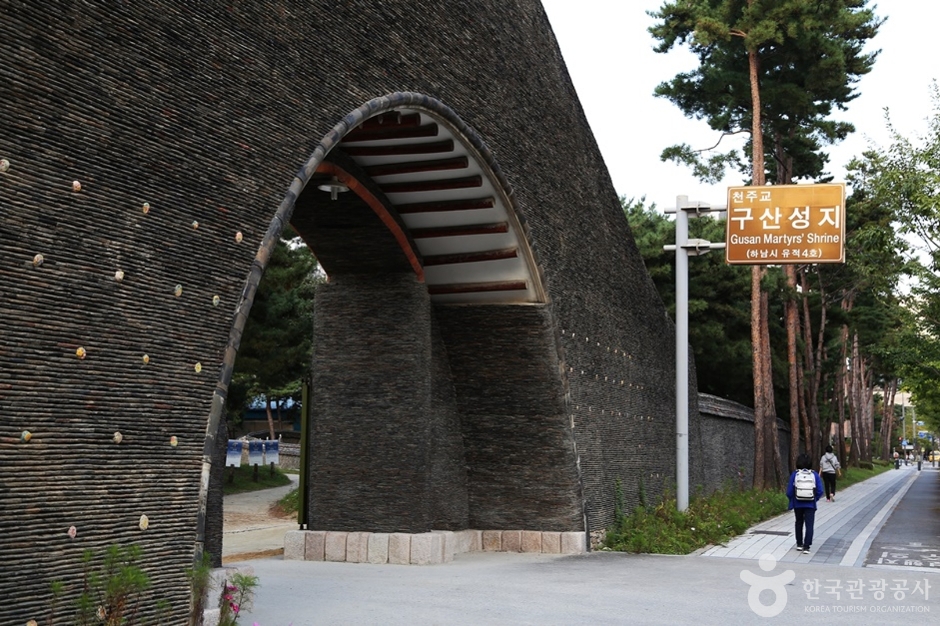
Gusan Martyrs' Shrine (구산성지)
10.9Km 2024-02-08
387-16 Mangwol-dong, Hanam-si, Gyeonggi-do
Gusan Martyrs' Shrine, located in Gusan Village, named for its turtle-shaped mountain, is a Catholic holy site. It houses the graves of nine martyrs, including Kim Seongwoo Antonio. The history of the martyrs, their persecution, and their lives, imbued with a spirit of martyrdom, attract Catholic pilgrims to the site. The area's picturesque landscaping also makes it a favored location for TV drama, commercial, and film productions.
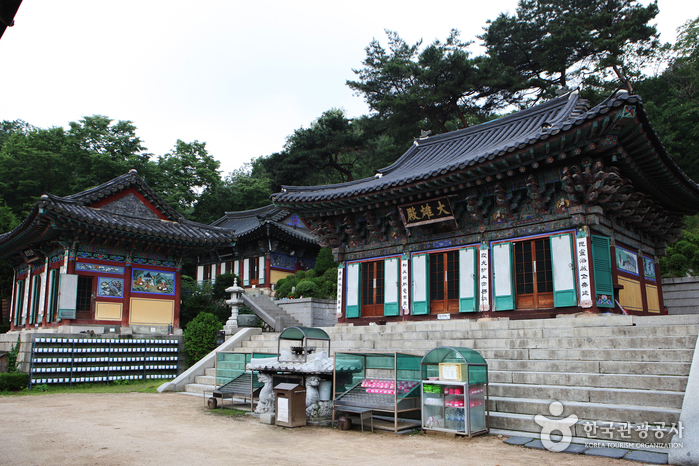
Seoul Hwagyesa Temple (화계사(서울))
10.9Km 2021-11-02
117, Hwagyesa-gil, Gangbuk-gu, Seoul
+82-2-902-2663
Hwagyesa Temple was built in 1522 (the seventeenth year of the reign of King Jungjong of the Joseon dynasty) by monk Shinwol, but was destroyed in a fire in 1618. It was rebuilt the following year, and expanded In 1866 through the efforts of Monks Yongseon and Beomun.
The temple also has various templestay programs for visitors. Hwagyesa Temple is located not too far from the city but also provides a natural environment.
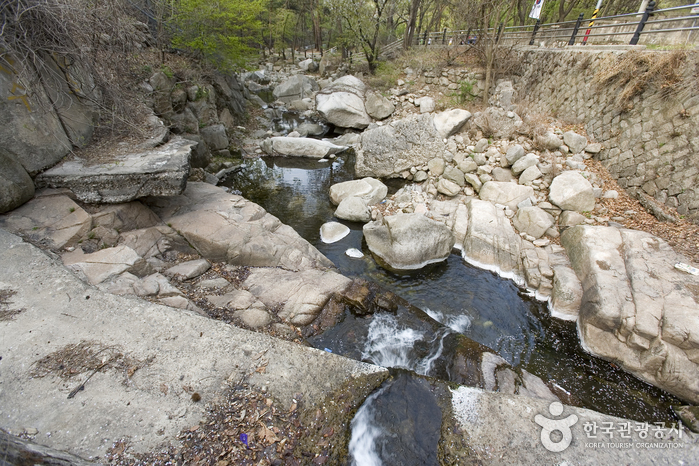
Uidonggyegok Valley (우이동계곡)
10.9Km 2021-06-09
Ui-dong, Gangbuk-gu, Seoul
+82-2-909-0497
Uidonggyegok Valley is located between Bukhansan Mountain and Dobongsan Mountain, and is a popular retreat for locals. Near the entrance to the valley are accommodations, a playground, wedding hall, and other amenities. Clean water runs through the valley, and is lined with restaurants. The hiking path starting to the left of the valley entrance passes Doseonsa Temple on the way to Insubong Peak. The hiking path through the valley is quite difficult, but leads to Uiam Hermitage, and further to Dobongsan Mountain along the ridge. Additional temples in the area include Seongbulsa, Yongdeoksa, Seonunsa, and Gwangmyeongsa Temples.
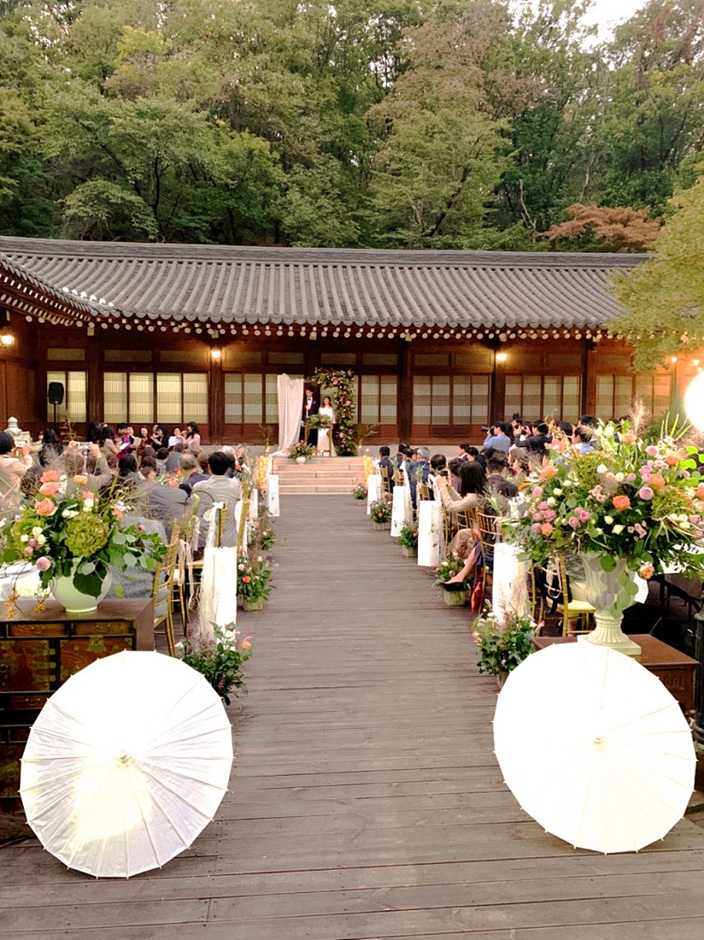
Seonungak (한옥카페 선운각)
11.0Km 2025-10-29
223 Samyang-ro 173-gil, Gangbuk-gu, Seoul
Seonungak is a hanok cafe facing Doseonsa Temple at the foot of Bukhansan Mountain, the perfect location to take in the beauty of the changing seasons. The cafe is also the largest hanok building outside of the royal palaces in Seoul. Previously limited to weddings and filming events, the hanok has reopened as a cafe, selling a range of traditional Korean drinks.
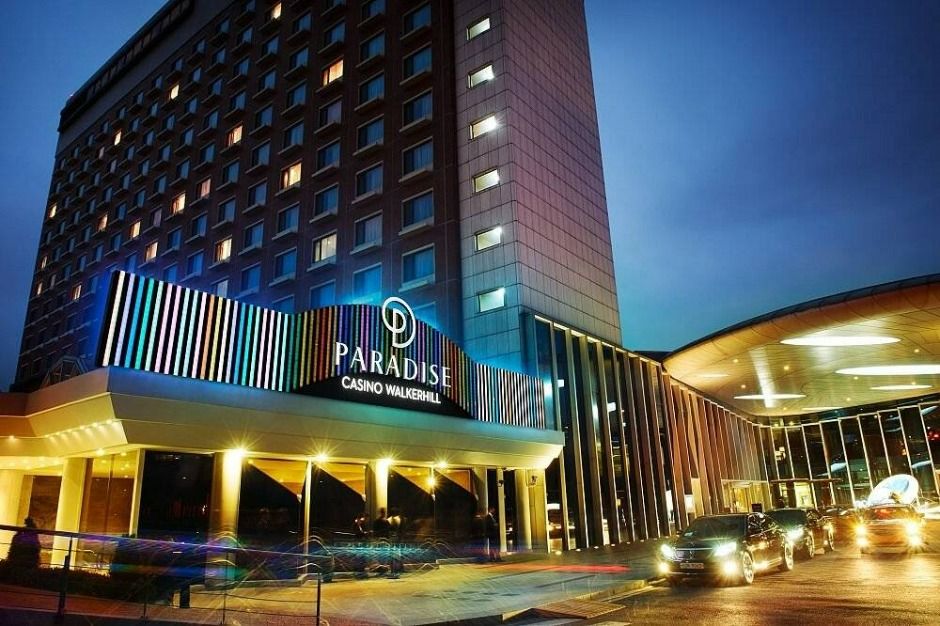
Paradise Casino Walker Hill (파라다이스 카지노 워커힐)
11.4Km 2025-05-16
177, Walkerhill-ro, Gwangjin-gu, Seoul
+82-1899-0700
Paradise Casino Walker Hill is a foreigner-exclusive casino operating inside Walker Hill Hotel, from where guests can enjoy a fine view of the Hangang River nearby. The casino is open 24 hours a day, all year round, and offers baccarat, blackjack, roulette, and tai-sai tables among others, and a variety of slot machines as well. The game tables are run by expert dealers, and staff members are fluent in many languages to serve the customers’ needs.
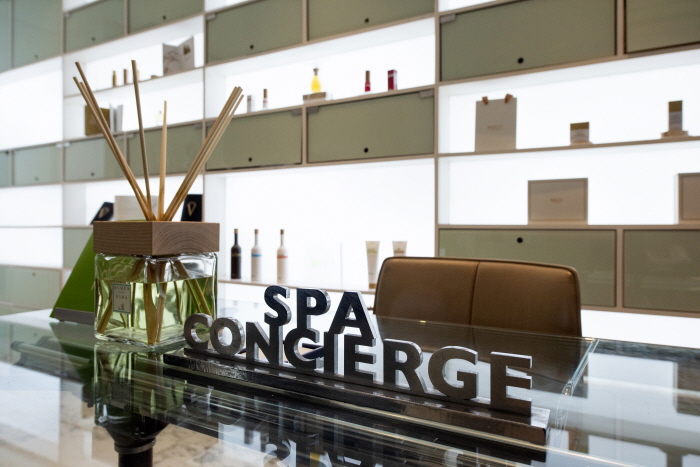
Vista Walkerhill Seoul, Wellness Club (비스타 워커힐 서울, 웰니스클럽)
11.4Km 2025-10-23
177, Walkerhill-ro, Gwangjin-gu, Seoul
+82-1670-0005
Vista Walkerhill Seoul is nestled in Achasan Mountain like a cloud overlooking the Hangang River. It offers beautiful natural sceneries that cannot be found in downtown. A combination of high technology and nature adds vitality while allowing guests to relax surrounded by nature. A new space where humans, nature, and the future coexist. Vista Walkerhill Seoul leads a sustainable and luxurious culture through differentiated and creative lifestyle experiences.
 English
 한국어
한국어 日本語
日本語 中文(简体)
 Deutsch
 Français
 Español
 Русский


