
Saengki Korean Medicine Clinic (생기한의원 강남역)
9.1Km 2025-12-10
14th Floor, Ara Tower, 3 Seocho-daero 77-gil, Seocho-gu, Seoul
Give treatment of skin diseases such as atopic dermatitis, psoriasis, eczema, hives, seborrheic dermatitis, warts, and pompholyx(dyshidrotic eczema)
Micrographic skin diagnosis for the first time in Korea
Development of the stilled medicinal wet dressing
Patent moxibustion for warts and condyloma
Presentation of papers at the World Conference
Treatment method:
herbal medicine and pills tailored to one's constitution / pharmacopuncture, acupuncture, moxibustion, light treatment according to symptoms / lifestyle guidance suitable for one's personal tendency
Gangnam Joeunnun Vision Clinic (강남조은눈안과의원)
9.1Km 2025-10-23
(7th,9th Floors, Meditower), 107 Teheran-ro, Gangnam-gu, Seoul
At Gangnam Joeunnun Vision Clinic, safe surgery is our top priority.
We offer safer and more advanced vision correction procedures based on 17 years of experience and know-how accumulated since the clinic’s foundation in 2007.
We are equipped with a wide range of university hospital-grade surgical and diagnostic equipment, including LENSAR, MEL90, Smile, Z4, Avefro KXL, and VisuMax 500 & 800.
We jointly operate the Smile Research Center with ZEISS, the German company that developed the technology, and share our advanced know-how with the world.
- Medical staff with 17 years of experience and know-how
- Jointly operate the Smile Research Center with ZEISS, the developer of SMILE LASIK.
- Conveniently located at Gangnam Station, Exit No. 12
Samsung Miracle Eye Clinic (삼성미라클안과의원)
9.1Km 2025-10-23
(7th,14th Floors), 115 Teheran-ro, Gangnam-gu, Seoul
Miracle in your eyes! World-class refractive surgery center in Seoul, Gangnam!
Samsung Miracle Eye Clinic! We will be in charge of your eye health! We present a new standard for ophthalmic treatment.
Since 2005, through over 20,000 surgical experiences and know-how accumulated for 25 years, we have led the present and future of ophthalmology only by focusing on the healthy eyes of patients.
We provide safe medical services to patients with satisfactory results, personalized medical care, and various genuine medical devices. Everything from appointment and questionnaire to consultations and surgeries is done smoothly in your language at our International Medical Center.
DA Plastic Surgery (디에이성형외과)
9.1Km 2025-10-23
DA Plastic Surgery Building, 125 Teheran-ro, Gangnam-gu, Seoul
DA Plastic Surgery operates plastic surgery, dermatology, hair transplant center, and anti-aging center and is located in Gangnam Station.
It consists of 42 professional medical staff including plastic surgeons, breast surgeons, otolaryngologists, and anesthesiologists. It provides interpretation services in eight languages, including English, Chinese, Japanese, Mongolian, Vietnamese, Indonesian, Russian, and Thai. We are building an all-in-one service for foreign customers ranging from airport pickup to consultation, examination, surgery, treatment, and follow-up care.
LG Arts Center (LG아트센터)
9.1Km 2024-03-18
(LG Arts Center Seoul), 136, Magokjungang-ro, Gangseo-gu, Seoul
+82-2-2005-0114
LG Arts Center is a cultural complex space designed by Tadao Ando, a world-renowned architect. Its architectural excellence and design have won great acclaim. The main facilities contain performance halls, Art Lounge, and Studio. The LG SIGNATURE Hall, a multipurpose performance hall, has a capacity of 1,300. Its state-of-the-art facilities and sound design have drawn many visitors and performances to the complex.
Himedi, Inc. (하이메디)
9.1Km 2025-11-21
4th Floor, 6-9 Teheran-ro 25-gil, Gangnam-gu, Seoul
Your Health, Your Journey. World-class medical tourism in South Korea, on your terms.
We only work with best clinics in Korea.
Our curated check up packages use Korea's most advanced diagnostic to give you answer beyond a typical exam, from full body check up to hormon test. Every packages comes with Himedi's concierge support.
We also provide a complete range of wellness and aesthetic services—including advanced skin care, hair restoration, dental treatments, vision correction, stem cell therapy, plastic surgery, and body sculpting—to help you look and feel your best.
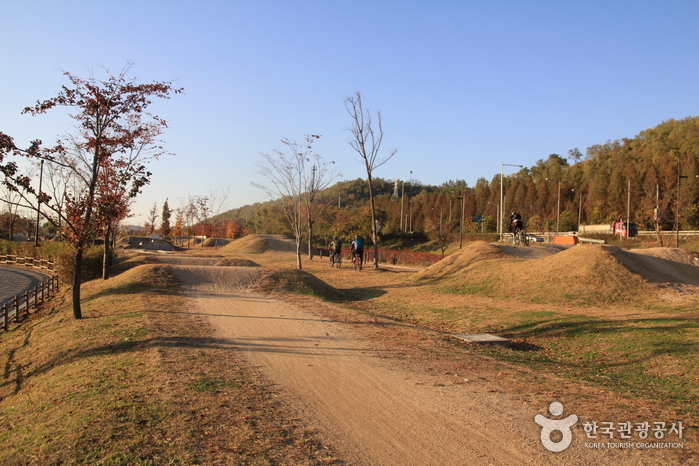
Nanji Hangang Park MTB Course Site (난지한강공원 MTB코스장)
9.1Km 2022-10-26
162, Hangangnanji-ro, Mapo-gu, Seoul
+82-2-3780-0611
Situated in Nanji Hangang Park, the MTB Course Site is perfect for MTB lovers as well as beginners who wish to enter the world of extreme biking with safety. The MTB Course Site is the nation's first MTB course site, established on a flatland, reproducing perfectly realistic mountain ridges and slopes.
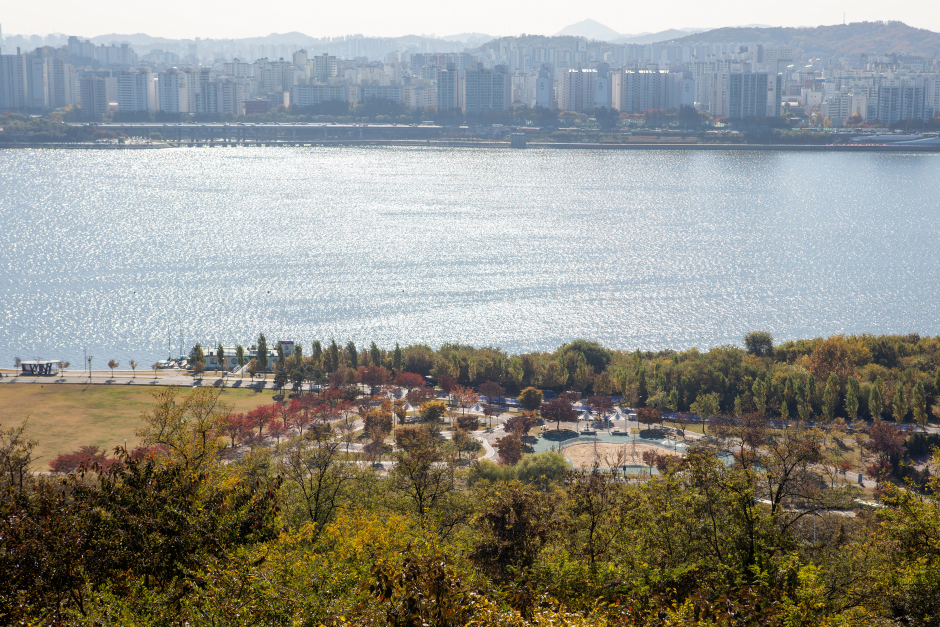
Nanji Hangang Park (난지한강공원)
9.1Km 2025-01-07
162 Hangangnanji-ro, Mapo-gu, Seoul
Nanji Hangang Park, situated north of the Hangang River near World Cup Park, provides a riverside space for leisure and recreation. The park offers Campgrounds, Water Leisure Sports Facilities, Bike Lane, Waterside Plaza, Mirror Fountain, Riverside Pool, a convenience store, and an information center. The Mirror Fountain emits a rainbow-like light with each water spray. The campgrounds are popular for their proximity to the city and affordable fees. Visitors can enjoy activities such as motorboating, water skiing, and wakeboarding on the Hangang River.
Ttukseom Hangang Park (뚝섬한강공원)
9.1Km 2024-07-09
139 Gangbyeonbuk-ro, Gwangjin-gu, Seoul
+82-2-3780-0521
Ttukseom Hangang Park was a famous resort site even before its rebirth as part of the greater Hangang Park. The park consists of various amenities: music fountains, a riverside square, a rose garden, playground, and a nature learning center.
The park boasts an exquisite cultural complex called Jabeolle (J-Bug), offering plenty of art and rest facilities as well as a magnificent view of the Hangang River. Conveniently located near Ttukseom Resort Station, Jabeolle houses a café, tea house, and gift shop, as well as exhibitions by media artists.
Ttukseom Hangang Park is open all year round and has a variety of attractions that change with each season. During the summer season, visitors can enjoy the thrill of windsurfing, waterskiing, and motor boating. During spring and fall, the park has a number of seasonal flower exhibitions. In winter, sledding and skating await.
In addition, the park offers facilities for X-Games, artificial rock climbing, cruise ships, a Saturday Flea Market, a nursing mothers’ rooms, and women's lounges, making the park a popular place for Seoul citizens.
Songkang Canoe School - Seoul branch (송강카누학교 서울분교)
9.1Km 2023-10-06
139, Gangbyeonbuk-ro, Gwangjin-gu, Seoul
+82-33-461-1659
Songkang Canoe School has a variety of services and equipment that enables visitors to experience the joys of kayaking worry-free. Kayak lessons, rentals, tours and equipment storage services are available. Make new friends and enjoy the beauty of the Hangang River with a visit to the Gangnam Canoe Club.
Kayaking at the Songkang Canoe School is taught with a methodical system that aims at giving more people a safe and enjoyable kayaking experience, regardless of level. The club staff love nature and have a passion for paddle sports. Using a dynamic teaching approach, staff members see teaching paddle sports as their mission in life, not just a job. With a pleasant, supportive staff that is always in pursuit of new experiences, participants are sure to create their own adventures.
 English
 한국어
한국어 日本語
日本語 中文(简体)
 Deutsch
 Français
 Español
 Русский


