
DM Plastic Surgery (디엠성형외과)
6.3Km 2025-12-09
(2nd Floor), 158 Apgujeong-ro, Gangnam-gu, Seoul
DM Plastic Surgery is a clinic run by a doctor from Yonsei University College of Medicine, the first university in Korea to establish a plastic surgery department.
As a former professor of plastic surgery at Severance Hospital of Yonsei University College of Medicine for 16 years and a board member of the Korean Society of Plastic and Reconstructive Surgeons, the chief director of DM is always striving to be a model in the medical industry. We promise to spare no effort, guided by the tenet of diligence and sincerity, to advance plastic surgery technology in Korea and to fulfill our responsibilities as plastic surgeons.
Goobne Playtown (굽네 플레이타운)
6.4Km 2025-01-16
23 Jandari-ro 2-gil, Mapo-gu, Seoul
Goobne Playtown is a culture and experience center operated by Goobne, one of Korea's chicken franchises that specializes in oven-roasted chicken instead of the standard fried chicken. Visitors can taste the latest products in a relaxing space, as well as enjoy media art and changing items in the pop-up zone.
Mo & Bless Clinic (모앤블레스의원)
6.4Km 2025-10-23
2nd Floor, 208 Apgujeong-ro, Gangnam-gu, Seoul
We provide meticulous care services for each person based on the principle of 'polarity' of Mo & Bless.
It is a reliable hospital with a high introduction rate that introduces people around them as well as their families because they are moved by the treatment.
As such, it is a reliable hospital with high satisfaction from patients who have visited the hospital proven through constant introduction.
Ichon Hangang Park (이촌한강공원)
6.4Km 2025-10-23
62 Ichon-ro 72-gil, Yongsan-gu, Seoul
+82-2-3780-0551
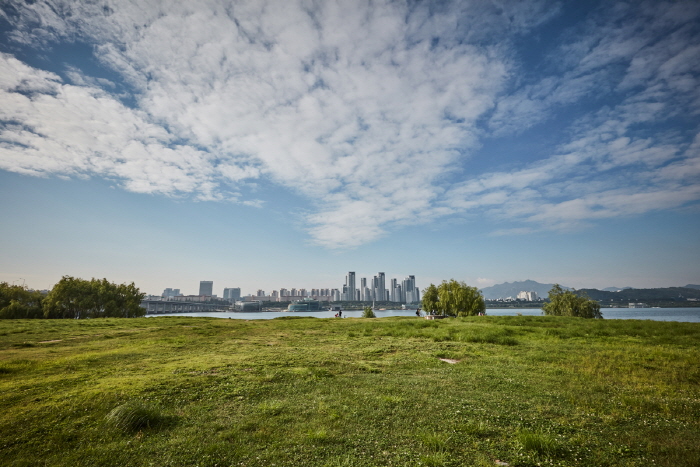
Ichon Hangang Park is built along the Hangang Park in Yongsan. From the park, one can see the Hangang River up close, and one can also find sports facilities like soccer fields, jokgu fields, inline skating rink, water sports facilities, bicycle paths, as well as a nature learning center built around a restored wetland and a lawn. One can follow the Hangangdaegyo Bridge to enter into the Nodeulseom Island, an island in the middle of the river.
◎ Travel information to meet Hallyu’s charm - TV series "Sisyphus: The Myth"
This park was featured in the TV series "Sisyphus: The Myth" as the setting where Seo Hae (played by Park Shin-hye) reflected on bittersweet memories with her father. Its expansive grounds make it an ideal spot for leisure activities such as walking, picnicking, and cultural events.
Seoul Fringe Festival (서울프린지페스티벌)
6.4Km 2025-07-24
84-3 Seongmisan-ro 13-gil, Mapo-gu, Seoul
+82-2-325-8150
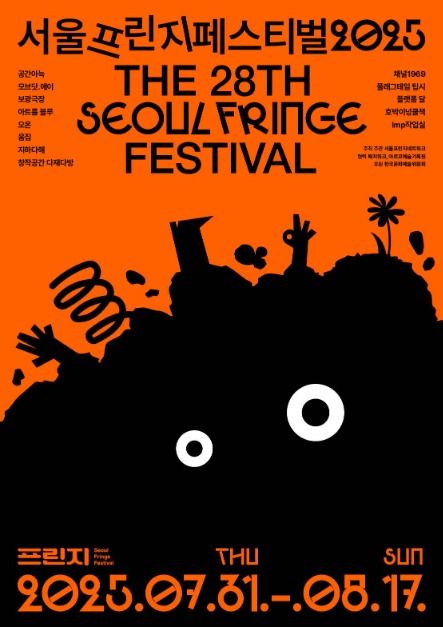
Seoul Fringe Festival has been held every summer annually since 1998. The festival is open to artists of all genres, from dance to music and media art. Due to the open style and non-competitive element of the festival, artists and festival-goers alike are free to express themselves however they choose.
Seoul Wave Art Center (서울웨이브아트센터)
6.4Km 2025-10-27
145-35 Jamwon-ro, Seocho-gu, Seoul
Seoul Wave Art Center is located within Jamwon Hangang Park, and focuses on promoting the relationship between the sky and earth, people and nature, and people and people. The art center opened in 2020 and has continued to host a range of new exhibitions.
KT&G Sangsangmadang Arts Space (Hongik University) (KT&G 상상마당(홍대))
6.4Km 2024-03-12
65 Eoulmadang-ro, Mapo-gu, Seoul
+82-2-330-6227
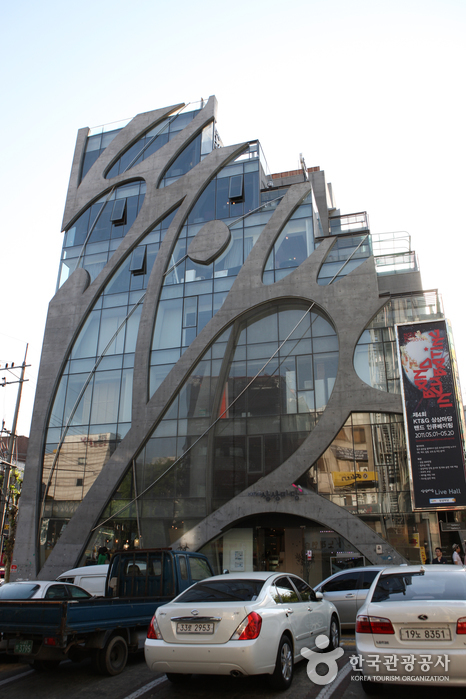
KT&G Sangsangmadang Arts Space is a multifaceted cultural space established in 2007. Spanning 660 meters with a total floor area of 3,366 meters, it features facilities such as a theater, a concert hall, a design square, a gallery, and cafés. It offers opportunities for close engagement with culture. Located near Hongik University Station, it boasts excellent accessibility and attracts many visitors due to its diverse attractions.

Tutorial (튜토리얼)
6.4Km 2025-10-30
39-15, Wausan-ro, Mapo-gu, Seoul
Singer Zion.T
The tutorial run by singer Zion.T and his father gives a comfortable first impression with white interior and spacious seats. The signature menu, 'Crumpled Paper Cake', is topped with non-smooth white icing and, as the name suggests, looks like crumpled paper. Chocolate sauce is provided here, so customers can write their own pictures or letters. Even if you're not good at it, you can make your own cake, so it's really fun. His dog ‘Haemeogi’ resting in the store as if indifferent is another specialty.

Haha & Kim Jongkook's 401 Restaurant (하하&김종국의 401정육식당)
6.5Km 2025-10-30
23 Jandari-ro, Mapo-gu, Seoul
'Running Man' members Haha & Kim Jongkook
It is a meat restaurant run by Haha and Kim Jongkook, members of the entertainment program 'Running Man'. With the concept of a Grilled Pork Belly restaurant, you can taste Grilled Pork Small Intestines, Grilled Pork Tripe, and Grilled Pork Rinds. It is characterized by the fact that the staff grills the meat for customers, and the combination of well-grilled Pork belly, Salted Anchovy Sauce, Green Onion Salad, and White radish cabbage is popular.
 English
 한국어
한국어 日本語
日本語 中文(简体)
 Deutsch
 Français
 Español
 Русский


