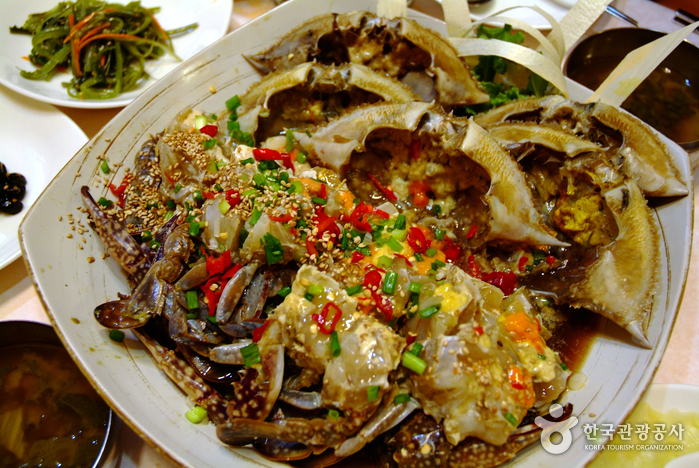
Gyegok Garden Kkotgejang (계곡가든꽃게장)
4.5Km 2024-04-07
470 Geumgang-ro, Gaejeong-myeon, Gunsan-si, Jeonbuk-do
Gyegok Garden Kkotgejang is a restaurant sought after by food enthusiasts nationwide, renowned as the first establishment in the country to patent gejang (marinated crab) cuisine. Originally selling dwaeji galbi (grilled pork galbi), the restaurant's main dish shifted to crab after its exceptional kkotge jang (soy sauce marinated crab) side dish garnered increasing attention from customers seeking gejang delicacies. The secret to its flavor lies in the authentic soy sauce, aged with 16 medicinal herbs, and the plump meat of female crabs. Customers can enjoy gejang with minimal fishy or salty taste, instead relishing in the rich and savory flavor of the crab.

CU - Kunsan University Oneroom Branch [Tax Refund Shop] (cu군산대원룸점)
5.3Km 2024-06-26
27-17, Hwangnyongan-gil, Gunsan-si, Jeonbuk-do
-
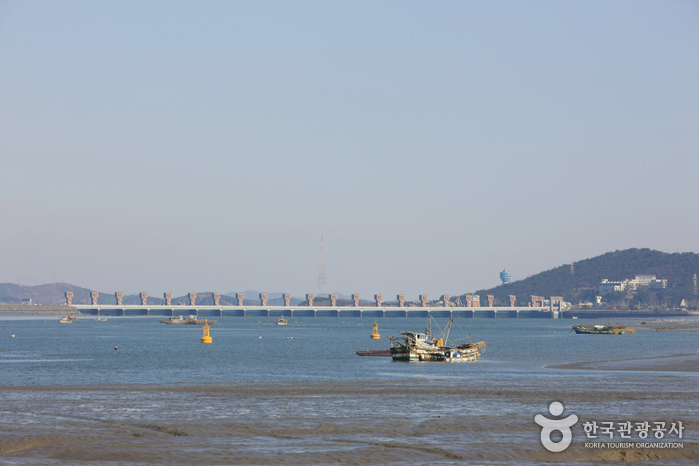
Gunsan Geumgang Estuary Bank (금강하구둑(군산))
5.7Km 2024-04-07
120, Cheolsae-ro, Gunsan-si, Jeonbuk-do
+82-63-454-3353
Geumgang Estuary Bank was completed in 1990 as part of an agricultural development project for 6 cities and counties in Chungcheongnam-do and Jeollabuk-do. The Korea Agricultural and Rural Infrastructure Corporation invested approximately 100 billion won for the project and the construction lasted for 8 years. The estuary bank can hold up to 130 million tons of water. The 1,840-meter long bank serves a bridge that connects Chungcheongnam-do to Jeollabuk-do.
Aside from being the source of water for agricultural and industrial use in Jeollabuk-do and Chungcheongnam-do, the bank also provides flood control for the area around Geumgang River. It helps keep Gunsanhang Port operational by preventing soil
and sand from accumulating at the mouth of the river. It also prevents the backwash of seawater from causing damage to farmlands. Geumgang Estuary Bank has an important role as a tourist destination by connecting Gunsan and Janghang.
Yubudo Island (유부도)
10.5Km 2024-02-21
Yubudo-gil, Janghang-eup, Seocheon-gun, Chungcheongnam-do
Yubudo Island is a small island in front of Seocheon's coastline, accessible by ferry from Janghang Port in about 30 minutes. The island boasts extensive tidal flats and saltern developed with embankment. It is a place where saltwater and freshwater mix, making it abundant in fish like grey mullet and shrimp. Yubudo Island is also known as a resting spot for over 100 species of migratory birds.
Gunsan Country Club (군산 컨트리클럽)
10.9Km 2024-04-07
1685, Namgunsan-ro, Gunsan-si, Jeonbuk-do
+82-63-472-3355
Gunsan Country Club is a golf course featuring 81 holes, including 18 holes exclusively for members only, on the site of an abandoned salt field that spans over 1,060 acres. It is the only course in Korea where all the holes are surrounded by lakes; around 380 acres or 36% of the course is comprised of lakes, and the holes are connected by 26 bridges. It has some of the longest golf holes in the world, including a Par 7 hole (1,004 m) and a Par 6 hole (661 m). The 18-hole private golf course is done in the classic American style, while the public golf course offers more variety.
Saemangeum Trail (새만금 광역탐방로)
12.5Km 2024-04-06
1192-1 Hwapo-ri, Jinbong-myeon, Gimje-si, Jeonbuk-do
Saemangeum Trail is a walking trail designed to showcase the exceptional natural scenery near the Mangyeonggang River. Spanning a total of 12.5 kilometers, starting from Mangyeong-eup's Tojeong Village and leading to Jinbong-myeon's Sampo Village, this trail allows walkers to immerse themselves in expansive rice paddy and lush greenery. Along the Mangyeonggang River, visitors can also observe various protected plant and animal species inhabiting the area.
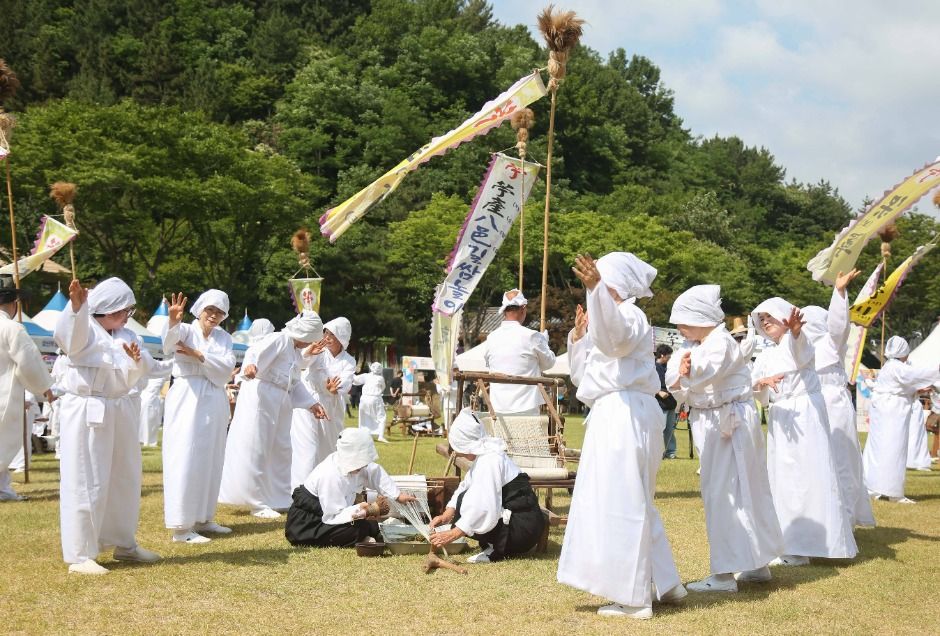
Hansan Ramie Fabric Cultural Festival (한산모시문화제)
12.8Km 2025-07-11
1089 Chungjeol-ro, Seocheon-gun, Chungcheongnam-do
+82-41-957-9045
Ramie fabric is a traditional Korean cloth with good ventilation, making it the fabric of choice for summer clothing. Hansan’s ramie is used to make high-end clothing due to its delicate and elegant texture. It is also an eco-friendly fiber that is extracted from ramie grass and weaved into a loom. Hansan’s ramie weaving was registered as a UNESCO Intangible Cultural Heritage in 2011 in recognition of its unique production technology as well as its ability to strengthen community solidarity in the process. At the Hansan Ramie Fabric Cultural Festival, visitors can participate in the “Ramie School” program and learn the weaving process. Other attractions include Gilssam Nori, a ramie-weaving work, and a fashion show featuring clothes made from Hansan ramie is a highlight not to be missed.
◎ Tip
During the festival, a free shuttle bus operates from the Hansan Mosi Hall parking lot to the festival venue.
Seocheon Dalgogae Mosi Village (서천 달고개모시마을)
12.8Km 2021-03-10
5, Hwahan-ro 504beon-gil, Seocheon-gun, Chungcheongnam-do
+82-41-950-6380
In Seocheon Dalgogae Mosi Village, the long-standing tradition of Hansan mosi (ramie fabric) is passed down and preserved in the hands of the village women. Hansan mosi is also called fine ramie because of the time-consuming and labor-intensive process involved. The village offers a variety of mosi-themed experience programs for visitors with the help of experienced village artisans. Programs include ramie plant harvesting and ramie fabric weaving. Visitors can also try some highly nutritious ramie rice cakes and tea.
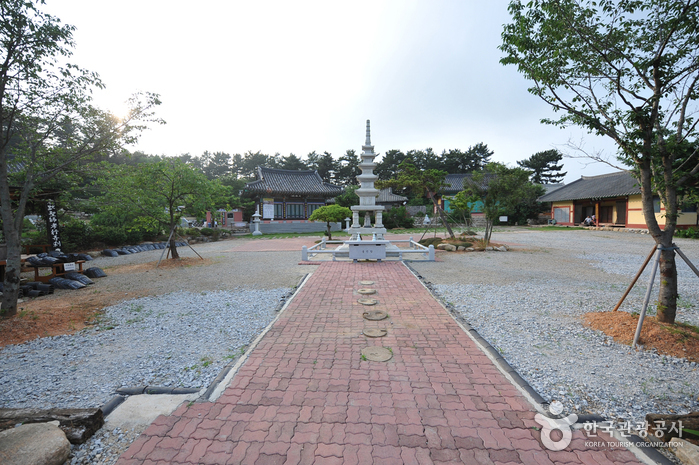
Gimje Seongmoam Hermitage (성모암(김제))
13.1Km 2024-04-07
54-9, Hwapo3-gil, Gimje-si, Jeonbuk-do
+82-63-544-0416
Seongmoam Hermitage, a temple of the Jogye Order, is located on Yuangsan Mountain in Mangyeong-myeon, Gimje-si. The temple is the final resting place of the mother of Jinmuk Daesa, a great Buddhist monk from the Jeonbuk region. Jinmuk believed that a person’s love and respect for Buddha is not that much different from the love and respect one has for his or her parents. As an expression of this philosophy, Jinmuk had his mother’s remains enshrined at the temple after she died at Mujasoncheonnyeonhyanghwajiji.
A neat little line of stone lamps leads visitors up from the parking lot to the temple grounds, revealing the well-attended grave of Jinmuk Daesa’s mother to the left. The temple is very unique in that it is the only one to house a caretaker’s office (Gosiraejoen Hall) that is responsible for maintaining the grave site.
It is said that prayers made to Seongmo (the holy mother) while visiting the temple will come true. Throughout the year, throngs of people journey to the temple to pay their respects and earnestly ask the holy mother to grant them their deepest desires.
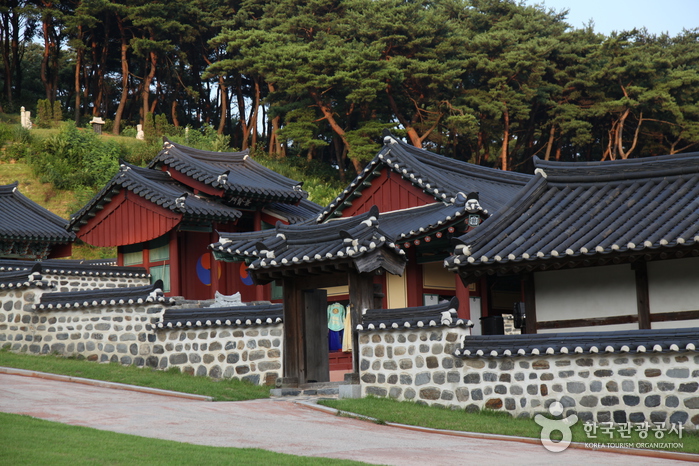
Munheonseowon Confucian Academy (문헌서원)
13.3Km 2025-10-23
66 Seowon-ro 172beon-gil, Gisan-myeon, Seocheon-gun, Chungcheongnam-do
+82-41-953-5895
Munheonseowon Confucian Academy was established to pay tribute to the memory of Lee Gok (1298-1351) and Lee Saek (1328-1396) who were well-respected for their writings and character. The school was originally built in 1594, but was burnt down during the Imjin War (1592-1598). It was rebuilt in 1610 and became a legislated private institute in 1611.
The academy consists of an educational area and a shrine. Mortuary tablets of five Confucian scholars including Lee Jong-hak, Lee Ja, Lee Gae as well as Lee Gok and Lee Saek were enshrined at the school.
 English
 한국어
한국어 日本語
日本語 中文(简体)
 Deutsch
 Français
 Español
 Русский


